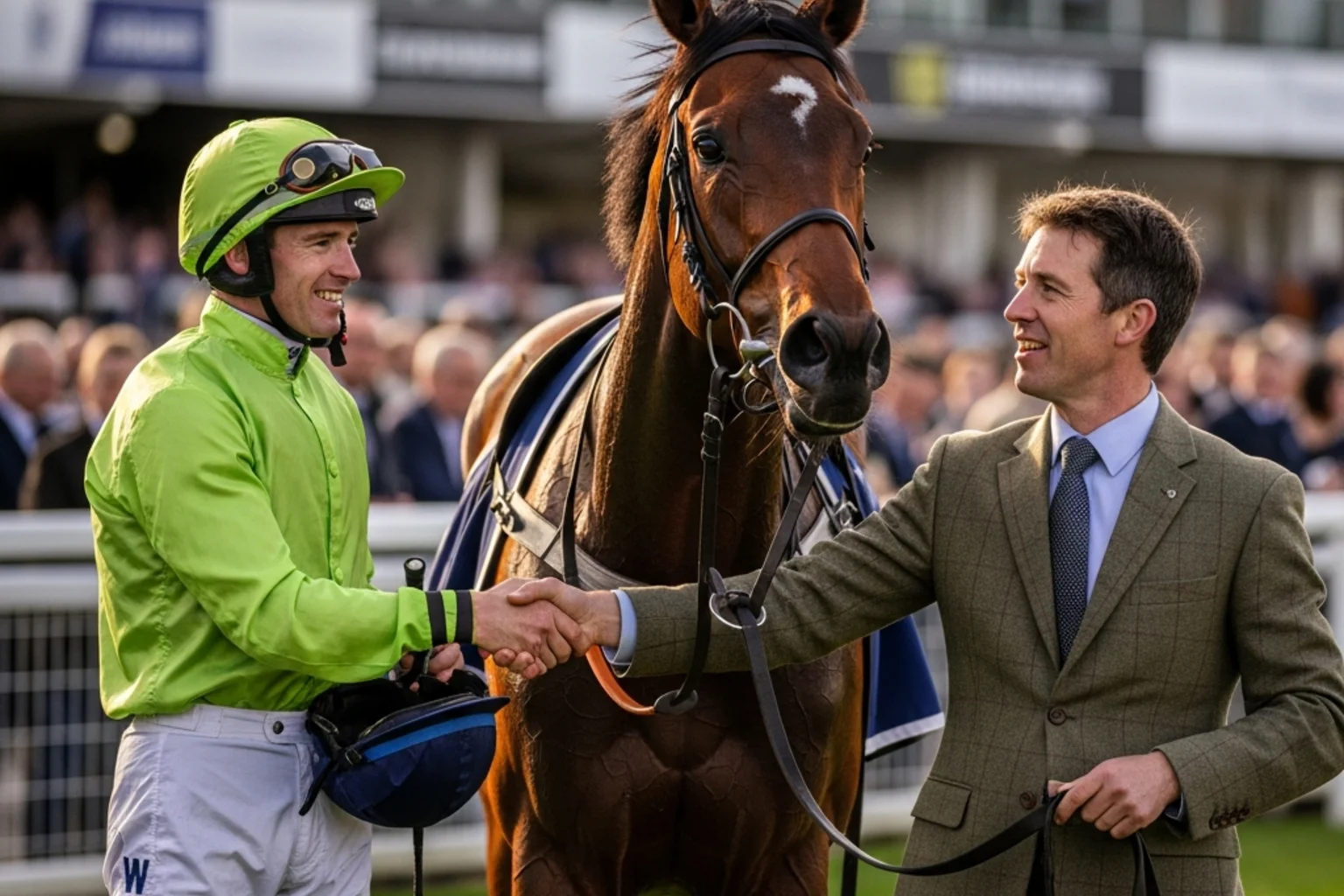
In big-field handicaps, connections matter more than casual observers assume. When twenty horses line up for the Lincoln Handicap, the name on the trainer’s licence and the silks worn by the jockey aren’t merely administrative details. They signal intent, preparation, and historical affinity with a race that rewards specific approaches.
Some trainers have cracked the Lincoln code. William Haggas, with five victories across three decades, stands as the modern master. Others have tried repeatedly without success, their methods poorly suited to the race’s demands. Understanding these patterns—who wins, who doesn’t, and why—provides analytical edge that raw form analysis might miss.
Jockeys bring their own dimensions to Lincoln analysis. The best big-race riders combine tactical intelligence with the nerve to execute plans in chaotic conditions. They’ve navigated cavalry charges before and know when to commit, when to wait, and how to extract every yard from their mounts in the final furlong.
Connections matter in a cavalry charge. This analysis examines which trainers and jockeys have demonstrated Lincoln expertise, which combinations work best, and how to weigh connection factors against other selection criteria. The goal isn’t to back horses solely on reputation but to recognise when a trainer’s record adds confidence to a selection—or when it should trigger caution.
William Haggas: The Five-Time Champion
William Haggas holds the modern record for Lincoln Handicap victories with five: High Low in 1992, Very Wise in 2007, Penitent in 2010, Addeybb in 2018, and Godwinson in 2025. That span of 33 years demonstrates sustained understanding of what the race demands—not fleeting success but repeated excellence across different eras of the sport.
After Godwinson’s victory in 2025, Haggas reflected on his Lincoln approach. “That’s five now, which is fantastic. We always try to find one for this race. Sometimes it comes off, sometimes it doesn’t—but this year, we got it right. Hopefully, it’s a sign of things to come for the season ahead.” The quote reveals deliberate targeting rather than opportunistic entry. Haggas identifies horses suited to the Lincoln and prepares them specifically for this race.
What connects Haggas’s five winners? They share certain characteristics. All carried weights within the statistically productive range. All were progressive handicappers rather than exposed performers. All entered the race fit enough to compete at pace while not over-raced during the winter. The trainer has clearly identified a type that suits the Lincoln and sources horses matching that template.
Haggas’s preparation philosophy prioritises race-day fitness without excessive exposure. His Lincoln winners typically arrive having run once or twice during the winter, enough to confirm wellbeing without revealing too much improvement to the handicapper. This approach requires patience and planning—you can’t stumble into a Lincoln winner with a horse you’ve been running regularly all winter.
The gaps between Haggas’s victories reveal something about the race’s difficulty. Fifteen years separated High Low and Very Wise. Eight more passed before Addeybb. Seven until Godwinson. Even the most successful Lincoln trainer doesn’t win annually—the competition is too fierce, the variables too numerous. But when Haggas does enter a serious contender, the market takes notice.
The yard’s resources matter too. Haggas operates one of Britain’s largest flat racing operations, with the depth of quality to identify genuine Lincoln types from broad ownership groups. Not every trainer has the roster to find the specific profile that wins this race. Haggas does, repeatedly.
For punters, Haggas entries demand respect. When he runs a horse in the Lincoln, it’s not speculative. It’s the culmination of targeted preparation from a trainer who understands exactly what winning requires. That doesn’t guarantee success—he’s had plenty of Lincoln runners finish out of the frame—but it signals serious intent worth factoring into analysis.
Top Trainers: Strike Rates and Patterns
Beyond Haggas, several trainers have demonstrated Lincoln expertise worth noting. Mark Johnston, Richard Fahey, and David O’Meara have each produced multiple winners or placed horses, their northern operations well-suited to Doncaster’s demands. These yards understand the track, understand the conditions, and understand what it takes to compete when the flat season opens.
Strike rates tell part of the story but require context. A trainer with one Lincoln winner from two attempts has a 50% strike rate—impressive but perhaps lucky. A trainer with two winners from fifteen attempts has a 13% strike rate—worse on paper but potentially more informative about genuine understanding of the race.
Sample sizes matter considerably. Most trainers run only one or two horses in the Lincoln annually. Over a decade, that’s perhaps fifteen runners total. Drawing conclusions from fifteen attempts at a 20-plus runner race requires statistical humility. The numbers suggest tendencies rather than certainties.
Trainer intent matters as much as raw statistics. Some enter horses in the Lincoln opportunistically, seeing an early-season race that fits the calendar. Others target the race deliberately, planning winter campaigns around the goal of arriving at Doncaster with a genuinely competitive runner. The latter group, regardless of past strike rates, deserves closer attention.
George Boughey, whose Oliver Show finished second in 2025, exemplifies the emerging generation of trainers taking the Lincoln seriously. His post-race comments showed analytical thinking: “I thought he’d done enough—he’s run an absolute stormer. He came back from Bahrain in great nick, and he’s a seriously progressive horse.” Boughey understood what his horse needed and prepared accordingly. That approach suggests future Lincoln success.
Smaller yards occasionally produce Lincoln winners, but the probabilities favour larger operations. The race demands a specific type of horse at a specific stage of development. Trainers with deeper rosters have better odds of finding that combination. This doesn’t rule out upsets—racing would be dull if size always predicted success—but it weights analysis toward established names when all else is equal.
Irish Trainers: 70 Years Without a Winner
The last Irish-trained Lincoln winner was Nahar in 1954—seventy years without success from one of racing’s most accomplished training nations. This drought is remarkable given Ireland’s dominance in so many other British races. Irish trainers win Cheltenham Festivals, Royal Ascot features, and Group 1 contests across Europe. But the Lincoln has resisted them for over seven decades.
Several factors explain the drought. The Lincoln’s timing coincides with Ireland’s own flat season opener, the Lincolnshire Handicap’s Irish equivalent. Top Irish handicappers often stay home rather than travel. The specific ground conditions at Doncaster in late March—frequently soft, occasionally unpredictable—may not suit horses prepared on Ireland’s typically faster surfaces.
Logistics also matter. Transporting horses from Ireland to Doncaster for an early-season handicap involves costs and disruption that might not be justified when domestic alternatives exist. The calculation differs for Group 1 races where prize money and prestige outweigh inconvenience. For a handicap, even a prestigious one, the Irish training community may simply prefer local options.
None of this makes Irish-trained Lincoln runners unbackable. Aidan O’Brien, Joseph O’Brien, Willie Mullins (in his rare flat ventures), or other major operators could target the race if they identified a suitable type. But the historical drought suggests Irish entries deserve sceptical assessment unless compelling reasons exist to believe this specific horse can break the pattern.
The 70-year statistic is information, not prophecy. Eventually an Irish trainer will win the Lincoln again. But when assessing an Irish entry against a British one of similar profile, the absence of recent success from Irish connections weights the analysis toward the home team. History isn’t always predictive, but seven decades of consistent failure suggests structural factors working against the raiders.
Jockey Statistics: Who Rides Winners?
Jockey statistics in the Lincoln must be interpreted carefully. The race occurs once annually, limiting sample sizes for any individual rider. A jockey with two Lincoln wins across fifteen years has demonstrated something, but whether it’s skill, luck, or simply having ridden for the right trainers remains debatable.
What matters more than historical Lincoln wins is big-race experience and tactical intelligence. The Lincoln’s chaotic closing stages demand riders who can process information quickly, identify spaces, and commit to runs without hesitation. Jockeys who thrive in small-field conditions may struggle when navigating twenty-plus rivals with limited room for error.
Cieren Fallon’s 2025 victory on Godwinson illustrated ideal Lincoln jockeyship. Despite initially unfavourable positioning, he assessed the race’s development and executed a ride that extracted every ounce from his mount. His post-race comments showed the tactical thinking involved: “The race panned out perfectly, we were drawn on the wrong side but I was able to tuck in, I got a lot of cover, they went hard and with the strong headwind I was able to pick up when I wanted and he was tough.”
That quote reveals several elements of successful Lincoln riding. Adapting to unfavourable circumstances. Using cover to conserve energy. Timing the challenge to coincide with rivals tiring. Maintaining belief in the horse’s toughness through a testing finish. These skills transcend individual jockeys but appear most consistently in experienced big-race riders.
Bookings by top trainers signal confidence. When William Haggas books a leading jockey for his Lincoln runner, it indicates the horse is considered a genuine contender rather than a hopeful entry. Trainers don’t waste top riders on no-hopers. The jockey booking itself becomes information about how connections rate their chances.
The championship jockey and top retained riders typically have multiple Lincoln options. Their choice of which horse to ride reveals something about the professional weighing up of different selections. When a rider chooses one trainer’s horse over another’s, the decision incorporates information punters might not have—work reports, gallop assessments, stable confidence.
British racing attracts global talent, and Lincoln fields often include jockeys from across Europe and beyond. These riders may lack Lincoln-specific experience but bring skills honed in equally competitive environments. An international jockey on a well-fancied runner shouldn’t be dismissed—but their unfamiliarity with Doncaster’s nuances might matter in tight finishes.
Trainer-Jockey Combinations
Certain trainer-jockey partnerships develop over time into formidable combinations. The rider learns the trainer’s methods, understands how horses from that yard are typically prepared, and executes plans based on shared understanding. These partnerships often produce results greater than the sum of their parts.
In the Lincoln context, established combinations carry extra weight. A jockey who has ridden the trainer’s horses throughout the winter knows the individual animal’s quirks, preferred tactics, and likely reaction to race-day pressures. A jockey parachuted in for a big-race booking may be talented but lacks that intimate knowledge.
Studying booking patterns reveals trainer confidence. When a trainer consistently uses the same jockey for important rides, it signals trust in that partnership. When bookings vary or when a less prominent rider appears on a fancied runner, questions arise. Why isn’t the stable’s usual big-race jockey available? Has something changed in the horse’s preparation?
Combination analysis extends to historical performance. Has this trainer-jockey partnership produced results at Doncaster before? Have they won competitive handicaps together? Have they demonstrated the tactical versatility the Lincoln demands? These questions add texture to raw statistics about individual connections.
The market sometimes misprices combinations. A well-known trainer with a less famous jockey might drift in the betting despite the partnership’s proven record. Conversely, a big-name jockey on an untried horse from a lesser-known yard might shorten without justification. Identifying these mispricings requires studying combination history rather than individual reputation alone.
Recent Form vs Historical Record
Trainer form leading into the Lincoln matters alongside historical Lincoln performance. A yard in excellent current form brings confidence, fitness, and momentum. A yard struggling might still produce individual runners capable of winning, but the overall picture adds context.
British racing experienced significant attendance growth in 2025, with totals exceeding 5 million spectators for the first time since 2019—specifically 5.031 million racegoers, representing a 4.8% increase on 2024. This broader industry health connects to individual yard performance. When prize money flows and owners invest, trainers can maintain quality. The Lincoln benefits from this ecosystem—competitive fields require multiple yards operating effectively.
Assessing current form requires looking beyond winners to placed horses, improving performances, and preparation patterns. A trainer with several near-misses in the weeks before the Lincoln might be fine-tuning horses to peak at exactly the right moment. A trainer whose runners have underperformed their marks might be dealing with issues that affect Lincoln chances too.
Historical Lincoln record and current form sometimes conflict. A trainer with multiple past winners might enter the 2026 renewal in poor current form. How should this be weighted? Generally, recent evidence trumps historical patterns—the sport evolves, rosters change, and past success doesn’t guarantee future results. But a trainer with proven Lincoln understanding deserves benefit of the doubt when their entry otherwise fits the winning profile.
The synthesis matters most. A trainer with Lincoln history plus strong current form plus an entry matching statistical trends represents the ideal scenario. A trainer lacking all three might still win—upsets happen—but the probability weighting favours connections demonstrating multiple positive indicators.
Trainer Quotes: Insights from Winners
Successful Lincoln trainers share common themes when discussing their approaches. Preparation, timing, and horse selection appear repeatedly. Understanding these insights reveals what winning the race actually requires.
William Haggas’s comments after Godwinson’s 2025 victory emphasised deliberate targeting: “We always try to find one for this race.” That phrasing—”try to find”—suggests searching for the right horse rather than forcing unsuitable types into the race. Haggas waits until he has genuine ammunition before committing to a Lincoln campaign.
George Boughey’s analysis of Oliver Show’s second place showed analytical depth about his horse’s development: “He came back from Bahrain in great nick, and he’s a seriously progressive horse. I thought he was at his ceiling, but he’s still improving.” The reference to international racing as preparation, and the honest assessment of where the horse stood developmentally, indicates thorough planning rather than hopeful entry.
Trainer quotes also reveal confidence levels. When connections speak cautiously about “hoping to run well” or “getting experience,” they’re managing expectations. When they discuss winning chances directly, with specific analysis of why their horse suits the race, that confidence merits attention. The tone of pre-race interviews sometimes signals more than the words themselves.
Post-race analysis from losing trainers can be equally informative. Comments about the draw, the ground, or bad luck identify specific factors that hindered performance. If those factors won’t recur—or if they favour a different horse you’re considering—the insight becomes analytically useful. Racing’s participants often explain results more accurately than outside observers.
Using Connections in Your Analysis
Connection analysis should complement rather than replace form study. A horse from a proven Lincoln yard still needs to match the statistical profile, show relevant form, and draw favourably. The trainer’s name adds confidence to an already-attractive selection rather than elevating an otherwise weak candidate.
Practical application involves layering connection factors onto existing analysis. You’ve identified horses matching the age, weight, and rating trends. Now ask: which of these selections come from yards with Lincoln expertise? Which have jockey bookings that signal trainer confidence? Which combine current form with historical understanding?
The weighting should reflect probability rather than certainty. A Haggas-trained horse matching all statistical criteria might deserve 25% more confidence than an equally profiled runner from an unproven yard. Not double confidence—the horse must still perform on the day—but a meaningful adjustment that compounds with other edges.
When two horses appear equally attractive on form, connections can serve as a tiebreaker. The runner from a five-time Lincoln-winning yard, ridden by an established partner of that trainer, deserves preference over an equally qualified runner from connections lacking Lincoln history. All else equal, proven understanding of race-specific demands matters.
Be wary of overweighting famous names. A Haggas entry isn’t automatically a winner—the trainer has plenty of Lincoln losers too. Connection analysis identifies edges, not certainties. The goal is tilting probability in your favour across multiple selections and multiple years, not guaranteeing individual outcomes.
Pre-race interviews and stable tours provide additional connection intelligence. Trainers occasionally reveal confidence levels, preparation details, or specific targeting through their comments. Jockey interviews may mention how a horse has worked or what tactics are planned. Aggregating this information adds depth to statistical analysis.
Finally, monitor market movements related to connections. Sharp money often knows things casual observers don’t. When a lesser-known trainer’s runner attracts significant support, professionals may have identified preparation signals or confidence indicators the public hasn’t noticed. Connection analysis includes watching how informed money assesses different yards’ chances.
Key Takeaways
Connection analysis adds valuable texture to Lincoln Handicap selections. William Haggas’s five victories across 33 years demonstrate that sustained understanding of race demands produces repeated success. His methods—deliberate targeting, specific preparation, progressive handicapper selection—represent a template other trainers attempt to follow.
Irish trainers have gone seventy years without a Lincoln winner, suggesting structural factors working against raiders despite Ireland’s broader racing excellence. British-trained runners from yards with Lincoln history deserve preference when other factors are equal. The drought will end eventually, but historical evidence weights analysis toward home connections.
Jockey selection signals trainer confidence. When top yards book established riders for their Lincoln entries, it indicates genuine contender status rather than speculative involvement. Studying trainer-jockey combinations over time reveals partnerships that produce results greater than individual statistics suggest.
Connection factors should complement form analysis rather than replace it. A horse from a proven Lincoln yard still needs to match statistical trends, show relevant recent form, and draw favourably. But when multiple selections appear equally attractive, trainer record and jockey booking can serve as tiebreakers. The goal is layering connection intelligence onto existing analytical frameworks, tilting probability through accumulated edges rather than seeking guaranteed winners.