
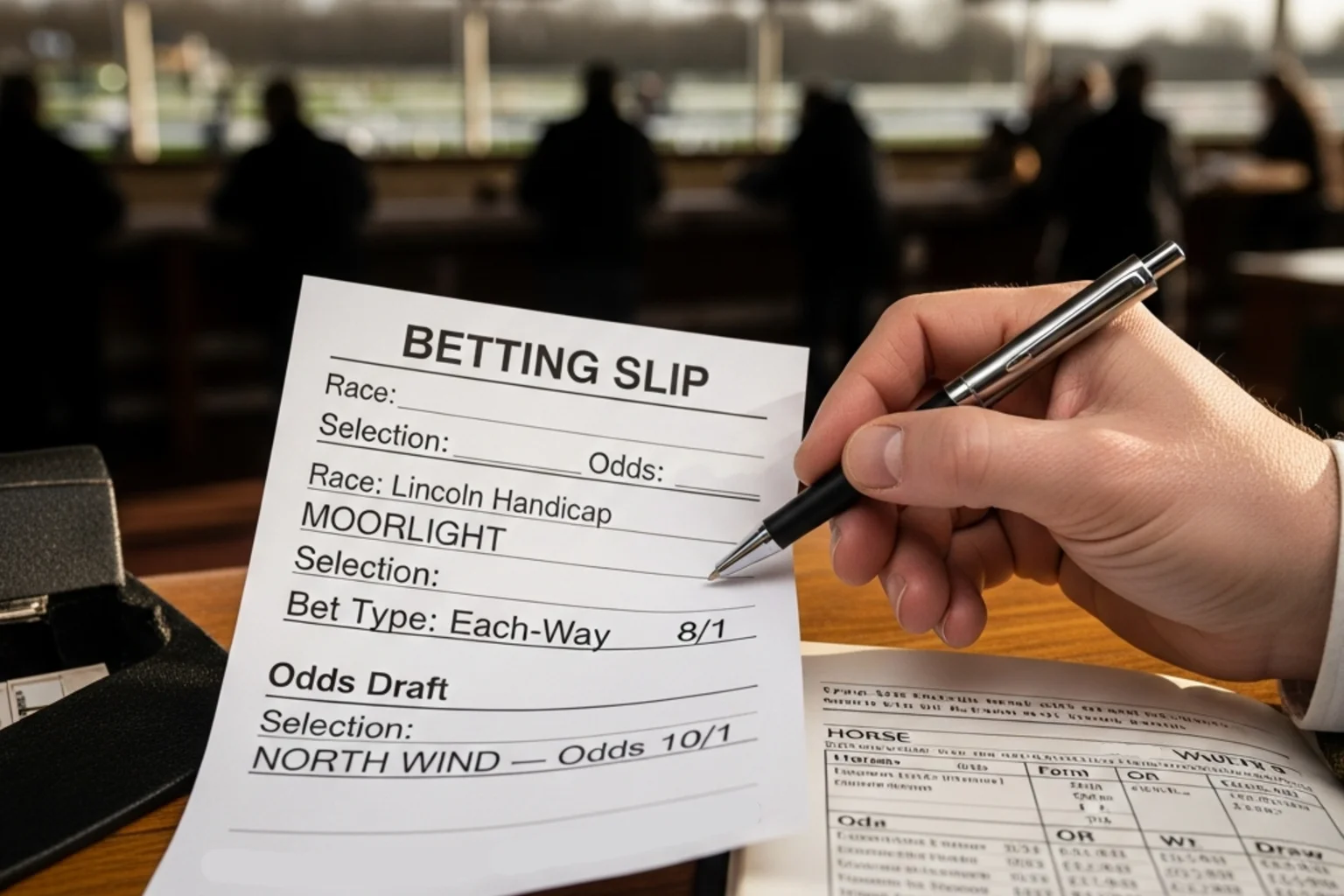
The Lincoln Handicap offers more betting options than most races, and each carries distinct risk-reward profiles. Choosing the right bet type matters as much as choosing the right horse. A selection that deserves backing at 14/1 each-way might not merit a straight win bet. An ante-post pick at attractive odds might lose its value by race day. Understanding these mechanics transforms how you approach the race.
Big-field handicaps create unique market conditions. Twenty-plus runners mean extended place terms for each-way bettors. They mean volatile ante-post markets where non-runners erode early prices. They mean over-rounds that can exceed 140%, compared to the 105-110% typical of small-field Group races. Match your bet type to your confidence level, and match both to the Lincoln’s specific characteristics.
This guide breaks down each major betting approach: win bets, each-way, ante-post, best odds guaranteed, place-only, forecasts, and in-play wagering. For each, we’ll examine how it applies specifically to the Lincoln, when it makes sense, and when you’d be better served by alternatives. The goal isn’t championing one approach over others but equipping you to make informed choices based on your analysis and risk tolerance.
Most punters default to the same bet type regardless of circumstances. That’s a mistake the Lincoln punishes. Its competitive, unpredictable nature rewards flexibility. By the end of this guide, you’ll understand which tools fit which situations—and how to deploy them when the 2026 field is declared.
Win Bets: Straightforward or Risky?
A win bet is the simplest wager: your horse wins, you collect; it doesn’t, you lose. In most races, this straightforward structure appeals to confident punters who’ve done their homework. In the Lincoln, that confidence needs serious justification.
The statistics argue against concentrated win betting. Only one of the last eleven Lincoln winners was the favourite. That single market leader succeeding against ten longer-priced winners suggests the race resists obvious selections. Backing the favourite win-only in the Lincoln has been a losing proposition over recent history.
Win bets do make sense in specific circumstances. If you’ve identified a horse that matches every statistical trend—the right age, weight, rating, and draw—and it’s available at double-figure odds, a win bet captures the full upside. The place insurance of each-way betting becomes less necessary when you’re backing something at 12/1 or longer that you genuinely believe should be half those odds.
The psychological trap of win betting is the binary outcome. Your selection finishes second by a nose, and you walk away empty-handed. In a race as competitive as the Lincoln, near-misses happen constantly. That runner-up at 14/1 would have returned a profit each-way but returns nothing on a straight win stake. Consider whether your analysis is strong enough to justify surrendering that safety net.
Professional punters sometimes use win bets in the Lincoln but typically alongside other bet types. A core win bet on a primary selection might be complemented by each-way savers on secondary fancies. This approach captures maximum value if the main selection prevails while maintaining exposure to the race’s inherent unpredictability.
For most punters, pure win betting on the Lincoln represents concentration risk in a race that punishes concentration. Unless you have exceptional conviction in a specific selection, blending win bets with other approaches usually produces better long-term results.
Each-Way Betting: Lincoln’s Sweet Spot
Each-way betting splits your stake into two parts: half on the win, half on the place. If your selection wins, both portions pay out. If it places but doesn’t win, only the place portion pays—at reduced odds, typically 1/4 or 1/5 of the win price. This structure suits the Lincoln’s competitive nature perfectly.
The Lincoln’s field size triggers enhanced place terms. With 20 or more runners, most bookmakers pay out on the first six places at 1/4 odds. Some offer seven places during promotional periods. Contrast this with smaller races paying only three places, and the value proposition shifts dramatically in favour of each-way bets in big-field handicaps.
Consider the mathematics. A £10 each-way bet at 14/1 costs £20 total (£10 win, £10 place). If your horse wins, you receive £150 win (14 × £10 + stake) plus £45 place (14/4 × £10 + stake) for £195 total. If it finishes second through sixth, you receive £45 place return on your £20 stake—a profit of £25 from a horse that didn’t even win. That safety margin transforms how you assess selections.
The Lincoln’s over-round has ranged from 117% to 140% in recent years, with 2025 hitting the 20-year maximum. High over-rounds mean bookmaker margins are substantial, but each-way betting partially mitigates this by giving you two chances per selection. The value erosion affects both win and place portions, but the broader place terms compensate somewhat.
Each-way betting particularly suits selections priced between 8/1 and 25/1. Below 8/1, the place return may not justify tying up stake money. Above 25/1, the selection is genuinely speculative, and smaller stakes might be appropriate. The 8/1-25/1 range represents the Lincoln’s core betting territory—where trend-matching selections typically price and where each-way mechanics work most effectively.
The trap to avoid: backing too many selections each-way and diluting your returns. Four each-way bets at £10 each costs £80. If one wins at 12/1, you’re still only marginally profitable after accounting for the three losers. Select two or three each-way fancies at most, concentrating your stake on the runners you’re most confident about placing.
Ante-Post Betting: Early Value, Real Risks
Ante-post markets open months before the Lincoln, offering prices that can dwarf those available on race day. A horse quoted at 25/1 in January might start at 8/1 in March if its preparation goes well. Capturing that early value represents genuine edge—but it comes with genuine risk.
The defining feature of ante-post betting is non-runner rules. If your selection doesn’t run, you lose your stake. No refunds, no transfers, no second chances. In a race like the Lincoln, where trainers often enter horses provisionally then withdraw based on conditions or handicap marks, non-runners are common. That attractive 25/1 price reflects the risk that you might be backing a horse that never appears.
Seven of the last eleven Lincoln winners started at 12/1 or longer. This outsider pattern creates opportunities for ante-post value hunters. If you identify a likely Lincoln type early—right age, right profile, trainer targeting the race—the odds available in winter might genuinely underestimate the horse’s chance once everything falls into place.
Timing matters considerably. Betting too early means maximum exposure to non-runner risk over an extended period. Waiting too long means the market has already adjusted to any positive information. The window between final declarations and race day typically sees prices sharpen dramatically as uncertain runners withdraw and the field crystallises. Experienced ante-post bettors often place initial wagers early then add to positions as confirmation emerges.
Some bookmakers offer “Non-Runner No Bet” promotions in the final week before the race. These eliminate the withdrawal risk while still offering better odds than those available on the morning of the race. If you’ve been tracking a selection ante-post but haven’t committed, NRNB periods represent a compromise between value and safety.
The practical question: what’s the maximum stake to risk ante-post? Most successful punters limit ante-post exposure to amounts they can afford to lose entirely. If losing £50 to a non-runner would sting significantly, that’s too much for an ante-post Lincoln bet. Scale your stakes to the risk, not to the potential reward.
Best Odds Guaranteed: Why It Matters Here
Best Odds Guaranteed is a promotional feature where bookmakers pay you at the starting price if it exceeds the odds you took. You back a horse at 10/1 in the morning, it drifts to 14/1 at the off, and you’re paid at 14/1. This insurance matters particularly in volatile Lincoln markets.
Lincoln odds move substantially between morning and post time. The competitive nature of the race, combined with late information about going, non-runners, and jockey bookings, creates price fluctuations that dwarf typical races. A horse might open at 12/1, drift to 16/1 as money arrives for rivals, then attract late support back to 12/1. Without BOG, backing at the “wrong” moment costs you value. With BOG, early betting carries less timing risk.
Most major UK bookmakers offer BOG, but terms vary. Some apply it only to bets placed after a certain time. Others exclude ante-post bets placed weeks earlier. Before placing significant Lincoln stakes, confirm your bookmaker’s BOG terms apply to your betting timeline. The protection is only valuable if it actually covers your wagers.
BOG encourages morning betting, which suits many punters’ schedules. You can analyse the final field, place your bets before work, and know that any subsequent drift works in your favour. This convenience shouldn’t override analytical rigour—don’t bet before you’ve assessed the draw, the going, and the final declarations—but it does make Lincoln morning a more comfortable time to commit.
The strategic implication: when BOG applies, take early prices on horses you expect to shorten. If your analysis suggests a selection is undervalued, betting early locks in that value while BOG protects against the downside. Conversely, if you suspect a horse might drift, you can wait while knowing the morning price sets a floor. BOG converts betting timing from a gamble into a strategic choice.
Place Betting: Insurance Play
Place-only betting wagers solely on a horse finishing in the places, ignoring the win outcome entirely. In the Lincoln, with six or more places paying, this creates opportunities for selections you expect to run well but not necessarily win.
The odds for place-only bets are calculated from the win price at the fractional terms—typically 1/4 or 1/5 for big-field handicaps. A horse at 8/1 win translates to 2/1 place (8/4) or 8/5 place depending on terms. These compressed odds mean place betting only makes sense for selections where you’re highly confident about placing but uncertain about winning.
Strategically, place-only suits horses with consistent profiles but limited win credentials. A horse that finishes 2nd, 3rd, 4th in most of its races—the honest handicapper that runs to its mark without ever exceeding it—might merit place-only support. You’re backing its floor performance rather than hoping for a ceiling effort.
The Lincoln’s competitive nature means place-only returns are modest. A place at 2/1 on a £10 stake returns £30. That’s profit, but it requires genuine confidence that the horse will hold its position against twenty-plus rivals. Many punters find better value in each-way betting, which captures both scenarios with more interesting returns if the selection wins.
Where place-only betting shines is in multiples. A place accumulator across three Lincoln fancies, each with solid place chances but uncertain win prospects, can return meaningful sums from a small stake. The variance is lower than win accumulators but the returns can still reach attractive levels if your selections all oblige.
Forecast and Tricast: Big-Field Exotics
Forecast betting requires selecting the first and second finishers in exact order. Tricast extends this to first, second, and third. In the Lincoln’s large fields, these exotic bets offer substantial returns but require either exceptional judgement or considerable luck.
The straight forecast demands correctly identifying both the winner and the runner-up, in order. Given that Lincoln winners frequently start at double-figure prices, and runners-up similarly so, the combination of two unlikely events creates astronomical odds. A forecast linking 10/1 and 14/1 might pay several hundred pounds from a £1 stake—but the probability of hitting it is correspondingly tiny.
Reverse forecasts ease the precision requirement. Your two selections can finish first and second in either order, doubling the possible winning combinations but halving the return per combination. In the Lincoln, where form is hard to separate, reverse forecasts acknowledge the uncertainty while maintaining exotic-bet potential.
Computer straight forecasts (CSF) and computer tricasts calculate payouts based on actual starting prices rather than fixed odds. This floating return means you don’t know exactly what you’ll win until the race finishes. CSF typically pays less than a true forecast at fixed odds but removes the risk of dividend changes affecting your return.
The practical use case for Lincoln forecasts involves combining two horses you rate highly but can’t separate. Rather than backing both each-way—which ties up more stake money—a reverse forecast offers exposure to both without requiring either to win outright. If they fill the first two places in either order, you’ve captured significant value from a single bet.
Tricasts extend the logic but multiply the complexity. Predicting three specific finishers from a 22-runner field is genuinely difficult, regardless of how strong your analysis. Most successful tricast bettors treat them as fun flutter territory rather than serious investment—small stakes for potential windfall returns, not strategic profit-seeking.
In-Play Betting: Limited but Possible
In-play betting allows wagers after the race has started, with odds adjusting in real time based on how the contest unfolds. Globally, 47% of all sports bets are now placed in-play, but horse racing—particularly short races like the Lincoln’s one mile—offers limited in-play windows.
The Lincoln takes approximately 100 seconds from stalls to finish. That’s not much time for in-play markets to develop. Bookmakers suspend betting for short periods during rapid market movements, and by the time you’ve assessed the pace scenario and position of your selections, the race may be half over. In-play Lincoln betting exists, but it rewards reflexes more than analysis.
Exchange betting platforms like Betfair offer the most liquid in-play Lincoln markets. Prices fluctuate based on other punters’ assessments, creating opportunities if you disagree with the market’s interpretation of how the race is unfolding. A hold-up horse appearing to be in trouble early might drift in-play, offering value to those who understand its running style requires a late surge.
Cash-out features connect to in-play dynamics. If you’ve backed a selection that’s travelling well mid-race, bookmakers may offer to buy out your bet at a profit before the finish. This locks in return but surrenders potential upside. In the Lincoln’s chaotic closing stages, where positions change rapidly, cash-out decisions must be instant. There’s rarely time for deliberation.
For most Lincoln punters, in-play betting represents a marginal activity rather than a core strategy. Pre-race analysis dominates, and bets are placed before the stalls open. In-play suits those with fast connections, experience reading live racing, and the discipline to execute decisions without hesitation. If that’s not you, pre-race betting offers a more considered approach.
Choosing Your Approach: Risk vs Reward Matrix
Your betting approach should align with your analysis confidence, bankroll size, and risk tolerance. There’s no universally correct way to bet on the Lincoln, but there are approaches better suited to different situations.
High confidence, single selection: consider a win bet if the horse prices above 10/1, or a larger each-way stake at shorter prices. When you’ve identified a runner that matches every trend and you’re convinced it’s undervalued, concentrating stake makes sense. The win portion captures maximum value if you’re right.
Moderate confidence, two-three selections: each-way betting on each at moderate stakes spreads risk while maintaining win exposure. The place terms mean one finisher in the first six can still produce returns. This approach suits punters who’ve narrowed the field to a shortlist but can’t separate their final picks.
Lower confidence, exploratory: smaller each-way stakes on trend-matching outsiders, perhaps combined with a forecast linking your two most favoured contenders. This accepts the Lincoln’s unpredictability and positions for upside without risking significant capital. It’s appropriate when you respect the race’s difficulty and prefer exposure over conviction.
Conservative approach: ante-post betting during NRNB periods on identified value, then potential top-up at race-day prices if the selection runs and conditions suit. This minimises non-runner risk while still capturing some early value. It suits punters who want Lincoln involvement without aggressive staking.
The bankroll question matters more than most acknowledge. A £50 Lincoln outlay represents different proportions of different bankrolls. Professional staking principles suggest risking no more than 2-5% of your betting fund on any single race. In the Lincoln, where variance is high and predictability is low, erring toward the conservative end of that range makes sense. The race returns annually—missing one year’s value is far better than depleting a bankroll on a bad result.
Match your approach to the race’s characteristics. The Lincoln punishes overconfidence, rewards patience, and offers value to those who understand its peculiarities. Choose bet types that acknowledge uncertainty rather than pretending you’ve solved an unsolvable puzzle.
Key Takeaways
Bet type selection matters as much as horse selection in the Lincoln. Win bets suit high-conviction punters backing double-figure prices; each-way bets capture the race’s competitive nature with six-place terms; ante-post bets offer early value with non-runner risk; Best Odds Guaranteed protects morning bettors from drift. Each approach serves different circumstances.
Each-way betting represents the Lincoln’s sweet spot for most punters. Extended place terms mean a horse needs only to hit the first six for the place portion to return. With seven of eleven recent winners starting at 12/1 or longer, the combination of win upside and place insurance suits a race where outsiders frequently prevail.
Ante-post betting carries genuine risk that non-runners will claim your stake. Time ante-post investments carefully, favour Non-Runner No Bet periods when available, and scale stakes to what you can genuinely afford to lose. The early prices reflect the risk—don’t bet as if they don’t.
Match your approach to your confidence level and bankroll. High conviction on a single selection might justify concentrated win stakes. Lower confidence across multiple fancies suits spread each-way betting. Exploratory interest might mean smaller stakes on forecasts or outsider each-ways. The Lincoln punishes overconfidence and rewards those who acknowledge its difficulty. Choose bet types that align with how much you actually know versus how much you’re hoping.