
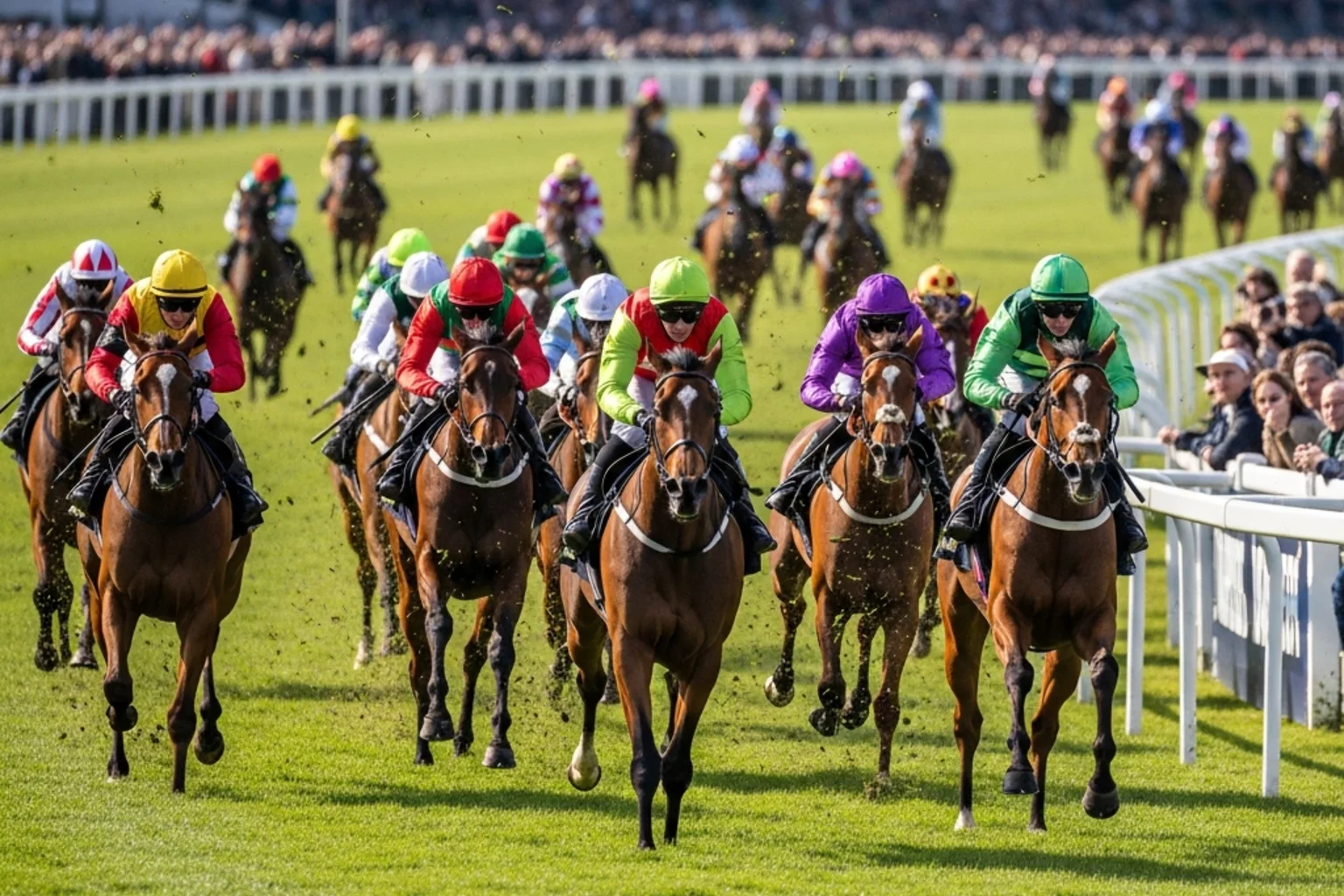
The Lincoln Handicap rewards preparation. Not the sentimental sort—placing a fiver on your cousin’s favourite colour—but the systematic study of patterns that repeat year after year in Britain’s oldest flat handicap. When twenty-plus horses thunder down Doncaster’s straight mile every late March, the chaos looks random. It isn’t. Strip away the noise and certain profiles surface with uncomfortable regularity.
This analysis draws on 21 years of Lincoln Handicap results, from 2004 to 2025. That timeframe captures the race exclusively at Doncaster, eliminating the variables that come with course changes. The dataset covers 21 winners, their ages, weights, official ratings, starting prices, and ground conditions. What emerges isn’t a crystal ball—no trend guarantees anything in a cavalry charge of ambitious handicappers—but it does reveal edges. The kind of edges that separate informed punters from those hoping their lucky number comes up.
Why does any of this matter? Because the Lincoln isn’t just another handicap. It carries a prize fund of £150,000, with the winner taking home over £77,000. It opens the British flat season with all the anticipation that entails. Trainers plot for months to land this prize, their preparations deliberately obscured through winter campaigns designed to secure favourable handicap marks. The race exists at the intersection of serious money and competitive opacity—conditions that make trend analysis particularly valuable.
Pattern recognition beats gut feeling. The numbers that follow aren’t abstract statistics divorced from the reality of race conditions. They’re actionable filters that can shrink a 22-runner field to a shortlist of genuine contenders. Whether you back one horse or construct a more elaborate strategy, understanding these trends sharpens your angle. Let’s start with the most consistent predictor: age.
Age Trends: The 4-5 Year-Old Dominance
If you retained only one statistic from this entire analysis, make it this: nine of the last eleven Lincoln winners were aged four or five. That’s not a marginal tendency. That’s a pattern so entrenched it should fundamentally reshape how you approach the race.
The broader 21-year dataset reinforces the point. Four-year-olds have won 11 of the 21 runnings since the race settled permanently at Doncaster. Add five-year-olds, and you’re covering the vast majority of winners. The numbers from At The Races confirm this dominance: the 4-5 age bracket represents the race’s sweet spot, combining physical maturity with enough unexposed potential to outrun handicap marks.
Why does youth pay dividends here? Several factors converge. First, four-year-olds often enter the season with scope for improvement that the handicapper hasn’t yet captured. Their winter breaks may have added condition without adding penalty. Second, this race comes early—the first Saturday of the flat season in most years. Younger horses tend to have fewer miles on the clock, fresher legs, and the constitution to handle a competitive mile at race pace after a layoff.
The exception proves the rule. Migration won the 2023 Lincoln as a seven-year-old, the first winner aged six or older since 1998. Before that, you’d need to scroll back through decades of results to find a veteran claiming this prize. One outlier in 25 years doesn’t constitute a trend. It confirms how heavily the race favours the younger profile.
What does this mean practically? When you scan the Lincoln field, horses aged six and above should face heightened scrutiny. They can win—Migration demonstrated that—but they’re swimming against the current. A six-year-old needs everything else in its favour: ideal weight, strong form, good draw. A four-year-old with question marks might still outrun its flaws on youth alone. Weighting your analysis accordingly tilts the odds in your favour before you’ve even examined form figures.
The 2025 running underlined the pattern. Godwinson, a five-year-old trained by William Haggas, prevailed in a tight finish. His age profile slotted perfectly into the historical template. Oliver Show, the runner-up, was also five. When the first two horses past the post both match the dominant age trend, that’s the data speaking louder than any tipster’s hunch.
Weight Patterns: The 8st 12lb–9st 4lb Window
Weight tells a story in any handicap, but in the Lincoln it tells the same story repeatedly. Nine of the last eleven winners carried between 8st 12lb and 9st 4lb. That narrow six-pound window has become the race’s statistical heartland, the zone where potential meets opportunity.
The logic follows handicapping fundamentals. Horses at the top of the weights—9st 7lb and above—face two obstacles. They’re typically well-exposed animals whose form the handicapper knows intimately. They’re also shouldering pounds that compound over a demanding straight mile. In a race with twenty-plus runners, the arithmetic works against them. They need to beat not one or two rivals but a cavalry charge of lighter-weighted improvers.
At the other extreme, basement weights often signal limited ability. A horse carrying 8st 4lb might be there because its form simply doesn’t merit more. The Lincoln isn’t a race where limited horses suddenly discover gears they’ve never shown. The 8st 12lb to 9st 4lb range represents a compromise: horses good enough to carry competitive weight but not so exposed that the handicapper has their measure completely.
Historical outliers exist but remain outliers. Cataldi won the 1985 Lincoln carrying 9st 10lb, a burden that would doom most contenders in today’s editions. That victory came at Lincoln Racecourse before the permanent move to Doncaster, under conditions that no longer apply. In the modern era, the weight window has narrowed and hardened into something close to a rule.
Trainers understand this. William Haggas, the race’s most successful modern handler, consistently enters horses slotting into the sweet spot. His five Lincoln winners—High Low, Very Wise, Penitent, Addeybb, and Godwinson—all carried weights that matched the trend. That’s not coincidence. That’s a trainer recognising which type of profile suits the race and preparing accordingly.
When assessing your shortlist, cross-reference weight against the other factors emerging from this analysis. A four-year-old carrying 9st 2lb immediately looks more appealing than a seven-year-old lumping 9st 10lb. The combination compounds the edge. Weight alone doesn’t pick winners, but weight outside the window should trigger a yellow flag in your analysis. Unless something else about the horse’s profile screams value, it’s fighting the numbers.
Official Ratings: The 94-102 Sweet Spot
Official ratings quantify ability in British racing, and in the Lincoln they point to a specific corridor. The typical winner carries a rating between 94 and 102, with the upper end of that range proving particularly productive. Eight of the last ten Lincoln winners since 2014 held ratings between 99 and 102—a four-point window that has generated 80% of recent winners.
This concentration makes sense within the handicap system. Horses rated in the mid-90s often lack the raw ability to sustain a challenge through the final furlong against better-rated rivals. They might threaten, fade, and finish mid-pack. Conversely, horses rated above 105 are fighting the handicapper’s assessment every stride. They’re well-known quantities running off marks that reflect, sometimes generously, their best form.
The 99-102 range occupies productive middle ground. These horses have demonstrated enough ability to compete at a meaningful level without becoming handicapping certainties. They often possess unexposed potential—the possibility of running to a rating higher than their current mark suggests. In early-season conditions, where fitness levels vary and winter improvement remains theoretical until proven, this unexposed quality carries extra weight.
Rating analysis also connects to how the race typically unfolds. The Lincoln demands tactical speed and sustainable stamina. Horses rated in the upper 90s and low 100s tend to possess this combination. They can travel through a race without getting outpaced, then quicken sufficiently to take advantage of tiring leaders. Higher-rated horses might possess explosive finishing speed in smaller fields but find that finishing burst diluted in the Lincoln’s congested cavalry charge.
Applying this filter requires nuance. A horse rated 94 entering the race with clearly improving form deserves consideration—it might run to 100. A horse rated 103 after a modest reappearance might find itself vulnerable to faster improvers. The rating itself matters, but context determines how much weight to place on it.
Cross-referencing ratings with age and weight amplifies the signal. A four-year-old rated 100, carrying 9st 1lb, matches every major trend this analysis identifies. That profile screams Lincoln winner on paper. Whether the individual horse delivers depends on the day, the draw, and the opposition. But starting from a position of statistical alignment means you’re not fighting the numbers. You’re riding with them.
Favourite Performance: Why the Market Gets It Wrong
The Lincoln Handicap embarrasses favourites with striking regularity. Over the last 25 years, favourites have won just seven times—a strike rate of 28%. That’s worse than random chance would suggest in most fields, and it reflects structural factors that make backing market leaders a losing strategy in this specific race.
The recent record is even more stark. Only one of the last eleven Lincoln winners started as the favourite. That solitary market leader bucked a pattern so consistent it borders on a betting rule: the Lincoln is where favourites go to disappoint. The reasons aren’t mysterious. They’re embedded in the race’s nature.
Big-field handicaps create chaos. Twenty-two runners spread across Doncaster’s straight mile cannot all obtain ideal racing room. Traffic problems emerge. Runs get blocked. Gaps close as quickly as they open. The favourite, typically carrying more weight and receiving more attention in the betting ring, often finds itself in the worst position to capitalise on the few clean opportunities. Meanwhile, unconsidered runners operating in clear space can exploit their lighter burdens and lower expectations.
Market formation compounds the problem. Ante-post betting on the Lincoln opens months before the race, and early money often gravitates toward established names with recognisable form. But early-season handicaps reward recent improvement over historical reputation. The horse that improved dramatically over winter, invisible to the market until its reappearance, may start at double-figure odds despite being the likely winner.
Bookmaker margins exacerbate value erosion for favourites. The Lincoln typically sees over-rounds ranging from 117% in competitive years to 140% in 2025—the highest in two decades. That margin gets disproportionately absorbed by heavily backed runners. A favourite at 6/1 in a race with 140% over-round represents worse value than the same horse at 8/1 in a more competitive book. The Lincoln’s market structure works against obvious choices.
None of this means favourites never win. The 28% strike rate confirms they do occasionally prevail. But building a Lincoln strategy around backing market leaders contradicts two decades of evidence. The edge lies elsewhere—in identifying the horses the market undervalues rather than rubber-stamping the obvious choice.
Outsider Value: The 12/1+ Pattern
If favourites disappoint, something else wins. In the Lincoln, that something else frequently starts at double-figure prices. Seven of the last eleven winners returned at 12/1 or longer. Three of those were priced at 18/1, 25/1, and 33/1—outsiders that transformed small stakes into significant payouts.
This pattern doesn’t suggest backing horses randomly at long odds. It confirms that the Lincoln’s competitive nature regularly produces winners the market fails to identify. The reasons connect to everything discussed earlier. Early-season fitness remains uncertain. Winter improvement stays hidden until race day. Trainers targeting this race specifically—like Haggas with his five wins—often bring horses that look over-priced because their preparation programme remained deliberately quiet.
Identifying which outsiders offer genuine value requires the same filtering approach this analysis has outlined. An outsider at 14/1 that matches the age, weight, and rating profile merits serious consideration. An outsider at 14/1 that fails every trend test probably deserves its price. The odds alone tell you the market’s assessment, not whether that assessment is correct.
Each-way betting gains particular relevance here. With field sizes typically exceeding twenty runners, bookmakers offer enhanced place terms—often six or even seven places at 1/4 or 1/5 odds. An outsider at 14/1 each-way only needs to place for the bet to return a profit. Given that seven of the last eleven winners started at 12/1+, backing trend-matching outsiders each-way captures both scenarios: the win payoff when they prevail and the place return when they run competitively.
Godwinson, the 2025 winner, started at 15/2—shorter than the typical winner profile but still far from favourite territory. The second-placed Oliver Show returned 22/1. The third, Orandi, started at 13/2. While this renewal saw more chalk than usual in the frame, it followed a Lincoln where the market favourite (Midnight Gun at 9/2) finished only sixth. That pattern of favourite underperformance repeats sufficiently often to make overlooking outsiders a structural error in Lincoln analysis.
The takeaway isn’t to back every longshot blindly. It’s to resist the gravitational pull toward short-priced horses that history suggests will disappoint. The Lincoln rewards those willing to look beyond the obvious. When a 14/1 shot matches the age, weight, rating, and draw profile that produces winners, that’s not a punt on a longshot. That’s a bet on the statistical evidence.
Going Preferences: Does Ground Matter?
Late March in Yorkshire produces variable ground. Some years see Good to Firm after dry spells. Others feature Soft conditions following spring rain. The Lincoln has been run on everything from testing ground to quick turf, and the range of conditions means ground preferences deserve consideration.
The data suggests winners can emerge on any going, but certain patterns appear. Softer ground tends to produce more stressful races, where stamina becomes paramount and high draws gain advantage. On quicker surfaces, pace often proves critical—front-runners can exploit faster ground to establish leads that surviving horses cannot close.
The track record stands at 1:36.51, set by Expresso Star in 2009 on Good to Firm ground. That’s a time that reflects genuinely quick conditions and a horse able to exploit them. Contrast that with Godwinson’s 2025 victory in 1:40.09 on Good to Soft—nearly four seconds slower, reflecting completely different race dynamics. Both winners excelled on the day’s conditions rather than requiring specific ground.
For bettors, this means checking each contender’s proven preferences. A horse with exclusively quick-ground form entering a Lincoln on Soft warrants caution. Conversely, a mudlark whose form reads best with cut in the ground becomes more appealing as rain arrives. The race doesn’t discriminate by ground type, but individual horses certainly do.
Weather forecasts gain relevance in the days preceding the Lincoln. Doncaster’s drainage is efficient, so conditions can change quickly with rainfall or drying winds. Monitoring going changes allows last-minute assessment of which horses might benefit or suffer from the official going description. A Soft-ground specialist rising in the betting after overnight rain isn’t coincidence—it’s informed money recognising shifting conditions.
Ground analysis shouldn’t override the other trends discussed here. Age, weight, and rating provide stronger predictive signals. But when two horses match those primary filters equally, ground preferences can serve as a tiebreaker. Picking the one proven on the expected going adds another layer of alignment with conditions, another marginal edge that compounds with the others.
Combining Trends: A Filtering Approach
Individual trends provide edges. Combined trends provide a system. The filtering approach works simply: start with the full field and eliminate horses that fail each criterion until a manageable shortlist remains. The process isn’t mechanical elimination—it’s weighted assessment that acknowledges which factors matter most.
Begin with age. Any horse aged six or older enters the analysis with a deficit. They can win, as Migration proved in 2023, but they’re exceptions requiring exceptional circumstances. A six-year-old with everything else perfectly aligned might still warrant consideration. A six-year-old carrying top weight and rated 105? Strike it from the shortlist immediately.
Next, apply the weight filter. Horses carrying more than 9st 4lb or less than 8st 10lb face statistical headwinds. Those in the 8st 12lb to 9st 4lb range start from a position of alignment. This doesn’t mean heavier or lighter horses cannot win—it means they need other factors strongly in their favour to compensate.
Official ratings provide the third filter. Focus on the 94-102 range, with particular attention to those rated 99-102. Horses above 103 are typically well-exposed and fighting their marks. Horses below 94 may lack the raw ability to sustain their challenge through the final furlong. The sweet spot exists because it balances ability with opportunity.
Market position offers context rather than direction. Knowing that favourites disappoint means not rushing to back them, but it doesn’t mean opposing every favourite regardless. If a horse meets every other criterion and happens to be favourite, the trend against market leaders weighs less heavily than its statistical alignment elsewhere. More commonly, though, the horses meeting all criteria will be priced at 8/1 to 20/1—the territory where the Lincoln’s winners typically emerge.
Draw factors enter the equation once ground conditions clarify. On softer ground, high draws towards the stands’ side have proven advantageous. On quicker going, the draw bias diminishes. This variable requires late-stage assessment rather than early filtering.
The goal isn’t identifying a single horse but constructing a shortlist of three to five genuine contenders. From that shortlist, staking decisions become clearer. Perhaps one horse meets every criterion perfectly—that’s your primary selection. Perhaps two others meet most criteria with minor question marks—those become each-way considerations at bigger prices. The filtering approach replaces gut feeling with structured analysis, pattern recognition with applied probability.
Key Takeaways
Twenty-one years of Lincoln Handicap data reveal patterns too consistent to ignore. Nine of eleven recent winners aged four or five. Nine of eleven carried between 8st 12lb and 9st 4lb. Eight of ten since 2014 rated between 99 and 102. These aren’t coincidences—they’re structural features of a race that rewards specific profiles.
The market repeatedly misjudges the Lincoln. Favourites have won just 28% of the time over 25 years, with only one of the last eleven winners starting shortest in the betting. Meanwhile, seven of eleven winners returned at 12/1 or longer. The race punishes those who back obvious choices and rewards those willing to look beyond market consensus.
British racing’s flagship flat season opener attracted over 5 million spectators in 2025—the first time that threshold had been crossed since 2019. As the British Horseracing Authority’s Racing Report noted: “Attendances in 2025 totalled 5.031m, the first time they have exceeded 5m spectators since 2019. There was much to be pleased about in 2025.” The Lincoln’s popularity endures because it combines tradition with competitive unpredictability. Understanding its trends transforms that unpredictability into opportunity.
Apply these filters not as rigid rules but as weighted probabilities. A horse matching every criterion represents a statistically aligned selection. A horse failing multiple filters faces compounding headwinds. The goal is shortlisting three to five genuine contenders from a 20-plus runner field, then staking accordingly. Win bets on the strongest profile. Each-way insurance on trend-matching outsiders. That’s how pattern recognition translates into practical betting strategy for Britain’s first big flat handicap of the season.