
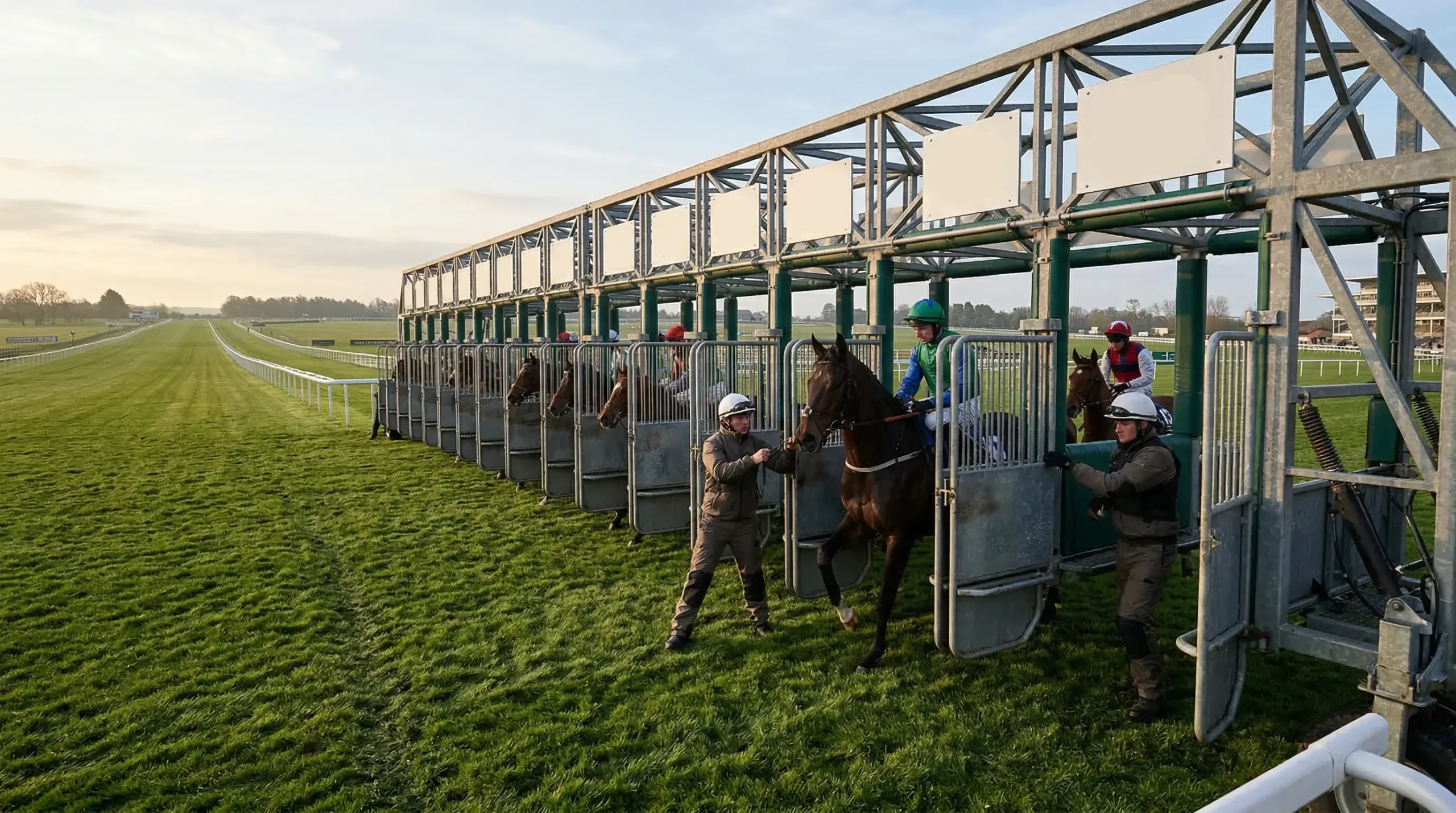
Doncaster’s straight mile presents a puzzle that divides opinion. Some analysts insist draw bias determines everything. Others argue the track runs fair and stall positions matter little. The truth, as with most things in racing, lies somewhere between—and understanding that nuance can separate profitable bets from losing ones.
The Lincoln Handicap amplifies whatever draw tendencies exist. Twenty-plus horses line up across a wide starting gate, spread laterally in ways that exaggerate any positional advantage. On a tight track or round a bend, horses naturally funnel together. On Doncaster’s straight mile, they can spread wide and stay wide, racing in distinct groups that experience different ground, different kickback, and different racing luck.
Draw is information, not destiny. A low draw doesn’t condemn a horse to defeat, nor does a high draw guarantee success. But ignoring draw data in a race this competitive means discarding a variable that has repeatedly influenced outcomes. The statistics that follow come from a decade of Lincoln results, supplemented by track analysis from course specialists. They won’t predict the winner. They will help you assess which runners face obstacles the market may have overlooked.
What separates useful draw analysis from pub punditry is context. Draw matters more in certain conditions, less in others. It interacts with pace, with ground, with field size. This analysis breaks down each component, then reassembles them into a practical framework you can apply when the 2026 field is declared and stall positions allocated.
Doncaster Straight Mile: Track Layout
Town Moor’s straight mile runs roughly north to south, with the winning post positioned near the stands on the western side of the course. The starting stalls line up across the course width, with low numbers on the far side (eastern rail) and high numbers toward the stands’ side (western rail). This geography becomes critical when ground conditions vary across the track.
The course is essentially flat, with minimal undulation. There’s no camber to speak of, no significant gradient that favours inside or outside runners. On paper, this should produce a fair track where draw matters little. In practice, the ground near each rail often rides differently, particularly in spring when the turf hasn’t fully recovered from winter.
Doncaster has hosted racing since 1615, making it one of Britain’s oldest racecourses. The Town Moor site offers ample space for wide, galloping tracks. The straight mile benefits from this heritage—it’s broad enough to accommodate large fields without excessive crowding. However, this same width means horses can become isolated in different parts of the track, racing on surfaces that may have seen different amounts of wear.
The far side, where low-draw horses race, can receive more wear from year-round use. The stands’ side, being closer to the finishing stretch that all races use, sometimes offers fresher ground. This distinction becomes pronounced on softer going, when horses actively seek out better footing. On quick ground, the difference diminishes—all surfaces ride similarly when firm.
Racing tends to split into groups when fields exceed 15 runners. A contingent might hold the far rail, another might angle across toward the stands’ side, and a third might take a central path. Jockeys make these decisions based on their assessment of the ground, the pace, and their horse’s preferences. Sometimes the entire field converges toward one side. Sometimes it splits and stays split. The outcome often depends on which group finds the better racing surface.
Understanding this layout means understanding that the Lincoln isn’t raced in a vacuum. The draw number matters because it dictates where your horse starts and, to some extent, where it’s likely to race. A jockey can cross from one side to another, but doing so costs ground and energy. More often, horses race near their draw position unless compelling reasons exist to switch.
The Numbers: 10-Year Draw Analysis
A decade of Lincoln Handicap results reveals clear patterns. Seven of nine winners from 2015 to 2024 drew stall 10 or higher—that’s 78% of winners coming from high draws. In a race where draws theoretically distribute winners evenly, that concentration demands attention.
The most successful individual stall positions tell their own story. Stalls 3, 10, and 12 have each produced two Lincoln winners in the past 15 years. Stall 3 stands out as the exception among low draws—a position that occasionally succeeds when conditions favour the far rail. Stalls 10 and 12 sit in the middle-to-high range that has dominated recent renewals.
These figures require interpretation. Not every Lincoln features identical field sizes, so stall 15 in a 20-runner field represents a different position than stall 15 in a 25-runner field. The key isn’t the absolute number but the relative position: middle to high draws toward the stands’ side have outperformed low draws toward the far rail.
The 2025 Lincoln provided a notable exception to the high-draw trend. Godwinson won from stall 3 in a 22-runner field—a low draw that, according to historical patterns, should have counted against him. Cieren Fallon, Godwinson’s jockey, acknowledged in his post-race interview that they “were drawn on the wrong side” but the race dynamics allowed him to tuck in, get cover, and time his challenge perfectly. The draw mattered, but exceptional jockeyship overcame the statistical disadvantage.
Statistically, the pattern holds across different going descriptions and field compositions. This persistence suggests structural factors rather than random variation. When seven of nine winners emerge from one half of the draw, and when that pattern repeats across varying conditions, the evidence points toward genuine bias rather than noise.
What does this mean for 2026? Simply that a horse drawn in stall 4 faces a statistical headwind compared to one drawn in stall 14. The low-draw horse isn’t doomed—two of nine recent winners came from low stalls—but it needs other factors in its favour to compensate. All else being equal, draw favours the high numbers.
High vs Low: Stands Side Advantage
The stands’ side advantage intensifies on soft ground. When the going description includes “Soft” or “Heavy,” high draws towards the stands’ rail have produced winners at disproportionate rates. Analysis from British Racecourses confirms this pattern: the stands’ side typically offers firmer, better-draining ground, particularly in spring when the turf is still recovering.
Why does this happen? The stands’ side receives less racing traffic throughout the year. The finishing straight for all Doncaster races runs down the stands’ rail, but the wide straight-mile course means that section gets proportionally less pounding. The turf retains better structure, drains more efficiently, and offers a more consistent racing surface when conditions deteriorate.
The far rail, conversely, sits on ground that takes longer to recover. It’s not waterlogged or unraceable, but it can ride a pound or two slower than the stands’ side on identical going descriptions. In a race as competitive as the Lincoln, those margins matter. A horse fighting through marginally slower ground expends more energy than one gliding over firmer turf.
On quicker going, this distinction diminishes significantly. Good to Firm ground rides consistently across the course width. Neither rail offers meaningful advantage. In these conditions, draw becomes less predictive—the 78% statistic from high draws includes some Good to Firm renewals but derives most of its signal from softer surfaces.
Jockeys recognise these dynamics. When ground is officially Soft, you’ll see more angling toward the stands’ side early in the race. Low-draw jockeys may sacrifice ground to cross toward better footing. High-draw jockeys can sit tight and let the race come to them. This tactical asymmetry compounds whatever raw advantage the ground provides.
The practical takeaway: check the going forecast before weighing draw significance. A horse drawn low on soft ground faces compounding disadvantages. The same horse drawn low on firm ground faces a much smaller obstacle. Conditions dictate how heavily draw should weigh in your analysis.
Weather Factor: How Going Shifts Draw Advantage
Spring weather at Doncaster ranges from unseasonably warm to bitterly cold, from bone-dry to waterlogged. The Lincoln’s late March scheduling places it at the mercy of this variability. One year sees sunshine and Good to Firm going. The next sees persistent rain and Soft ground. The draw’s influence shifts accordingly.
Heavy rainfall in the days before the Lincoln amplifies high-draw advantage. The ground becomes more demanding, stamina becomes more important, and any marginal difference in surface quality between the two sides of the track becomes magnified. In these conditions, a high draw isn’t just preferable—it’s almost a prerequisite for contention.
Conversely, a dry spell leading into the race flattens the bias. When the going reads Good or quicker, horses can race effectively anywhere across the track width. The statistical advantage of high draws persists but weakens substantially. These are the renewals where low-draw horses can win—when conditions neutralise the structural disadvantage they normally face.
Godwinson’s 2025 victory came on Good to Soft ground—conditions that typically favour high draws. Yet he won from stall 3, the stands’ side disadvantage overcome by his jockey’s tactical excellence. Cieren Fallon’s post-race comments noted he was “drawn on the wrong side” but tracked runners and timed his challenge superbly. This exception reminds us that while draw bias is real, class and horsemanship can overcome positional disadvantages.
Weather forecasting gains importance in the final 48 hours before the race. Doncaster’s efficient drainage means conditions can change rapidly. Overnight rain can shift the going description entirely. Bettors who monitor these changes gain an edge—they can adjust their draw weighting in real time as the actual race conditions clarify.
The interaction between weather and draw creates scenarios where a horse’s odds don’t reflect its actual chance. A horse drawn low might be correctly priced for average conditions but underpriced if the forecast shifts to soft. Conversely, a high-draw horse might be overbet by punters who assume the bias always applies, even when the ground is riding fast. Understanding this dynamic means spotting these mispricings before the market corrects.
Field Size Impact: Draw in 15+ vs 20+ Runners
The Lincoln typically attracts maximum fields. When 22 or more horses line up, the starting stalls stretch across the full course width, and the draw’s influence intensifies. In smaller fields of 12-15 runners, the stalls cluster more centrally, reducing positional extremes and diminishing bias effects.
Large fields create separation. The horses on the far rail and those on the stands’ rail might race 40 yards apart for much of the contest. They experience different ground, different crowding, different traffic. In effect, they’re running parallel races that only converge in the final furlong. When you’re analysing a 22-runner Lincoln, think of it as two or three mini-races happening simultaneously, with the group that finds the best ground enjoying the best chance.
Smaller fields allow for more jockey improvisation. With fewer runners, there’s more room to manoeuvre. A low-draw jockey in a 14-runner race can angle across to the stands’ side without sacrificing much ground. In a 22-runner race, that same manoeuvre costs more energy and more lengths. Field size determines how “locked in” horses are to their draw positions.
The Lincoln hasn’t run with fewer than 18 declared runners in recent memory. This consistently competitive field ensures draw remains relevant every year. Trainers know the race attracts full quotas, which is why ante-post betting often considers probable draw ranges even before final declarations. A well-handicapped horse might still be avoided if historically it’s drawn low and the ground forecast looks soft.
Field size also affects pace dynamics. More runners mean more potential front-runners, which increases the likelihood of a strong early gallop. Strong early pace tends to favour hold-up horses who can pick off tiring leaders. Draw affects where those hold-up horses can position themselves—high draws allowing cleaner runs up the stands’ rail, low draws requiring more tactical navigation.
The practical implication: don’t assume all draw statistics apply equally regardless of field size. The 78% figure for high-draw winners emerges from predominantly full-field renewals. If a future Lincoln runs with only 15 runners for some reason, that statistic would require adjustment. Under typical conditions, expect full fields and treat draw as a significant variable.
Draw and Pace: Tactical Combinations
Draw doesn’t operate in isolation from running style. A horse’s preferred pace—front-running, prominent, midfield, or hold-up—interacts with its stall position to create different scenarios. The best draw in the world means little if the horse can’t exploit it tactically.
Analysis from Geegeez describes Doncaster’s straight mile as a “fair track” where hold-up horses can win without significant disadvantage. This fairness manifests because the straight course allows closers to pick their paths through the field rather than getting trapped behind walls of horses on a bend. But “fair” doesn’t mean “equal”—it means that tactical options exist from various draw positions.
Front-runners from low draws face the trickiest scenarios on soft ground. They’re on the slower side of the track and must either maintain position on inferior ground or use energy angling toward better footing. Neither option is ideal. Front-runners from high draws can set the pace on the stands’ rail, benefit from firmer ground, and save the energy that would otherwise be spent correcting position.
Hold-up horses gain flexibility. From any draw, they can assess where the race is developing and steer toward clearer ground. A hold-up horse drawn low can still perform well if its jockey identifies when the pace is favouring one side and adjusts accordingly. Cieren Fallon’s ride on Godwinson exemplified this—dropping in, assessing traffic, and timing his challenge to hit the line first.
The pace of the race itself varies year to year. Some Lincolns are run at a furious gallop that burns off front-runners. Others see tactical affairs where the early pace is steady and the sprint unfolds over the final two furlongs. When analysing each horse’s draw, consider its running style and how that style fits the likely pace scenario. A hold-up horse from a low draw in a fast-run race might actually be better positioned than a front-runner from a high draw in a tactical race.
Trainers and jockeys discuss pace scenarios when planning Lincoln campaigns. William Haggas, whose five winners have employed various running styles, often lets the race unfold before committing. That patience suggests he values adaptability over predetermined tactics. Draw determines starting position; pace determines how the race develops; the combination creates each horse’s actual racing experience.
Practical Application: Using Draw in Selections
Draw analysis should function as one filter among several, not the sole criterion for backing or opposing a horse. A contender matching every other profile—right age, right weight, right rating, strong form—shouldn’t be discarded purely because it drew stall 5. But draw should inform how much confidence you attach to that selection and how you structure your bet.
Step one: check the going forecast. If the expected conditions are Good to Firm, treat draw as a minor consideration. The historical bias weakens substantially on fast ground, and other factors—form, fitness, jockey booking—take precedence. If conditions look Soft or worse, elevate draw to a primary filter. High numbers toward the stands’ side deserve clear preference.
Step two: identify the likely pace scenario. Assess how many front-runners are in the field and whether the race is likely to unfold tactically or at a genuine gallop. Front-runners from low draws face the steepest challenge; hold-up horses from any draw can adapt. Consider how each horse’s style fits its stall position.
Step three: cross-reference draw with the other trends established in Lincoln Handicap analysis. A four-year-old rated 100, carrying 9st 1lb, drawn in stall 14 on soft ground matches every winning profile. That’s the type of runner that deserves serious investment. A seven-year-old rated 106, carrying 9st 10lb, drawn in stall 2 on soft ground fails multiple filters—the draw adds one more reason for caution, not the only reason.
When draw creates genuine doubt, consider adjusting your stake rather than abandoning the selection entirely. A horse you’d normally back at full stake might warrant half-stake if drawn unfavourably. This approach captures value when the horse wins despite its draw while protecting your bankroll against the statistical headwind.
Finally, monitor late market moves. Sharp money often incorporates draw information after stall positions are revealed. If a horse drifts after drawing low, the market may be penalising the draw appropriately. If a horse firms after drawing high, you may have missed the value. Late-stage price movements frequently reflect draw assessment by professionals who understand these dynamics.
Key Takeaways
Doncaster’s straight mile produces measurable draw bias in the Lincoln Handicap. Seventy-eight percent of winners from 2015-2024 came from stall 10 or higher, with stalls 3, 10, and 12 proving most successful individually. This concentration toward the stands’ side reflects ground conditions that favour higher-numbered stalls, particularly when the going turns soft.
The bias isn’t absolute. Draw operates as information rather than destiny—two of nine recent winners came from low stalls, proving that draw disadvantage can be overcome. However, low-draw horses need other factors strongly in their favour: ideal form, favourable going preferences, and tactical adaptability to cross toward better ground.
Weather conditions modulate the bias significantly. On Good to Firm ground, draw differences diminish and other factors take precedence. On Soft or Heavy ground, high draws become almost prerequisite for serious contention. Monitoring the going forecast in the days before the race allows real-time adjustment of how heavily draw should weigh in your analysis.
Practical application means treating draw as one filter among several. Check going conditions first to gauge draw relevance. Consider pace dynamics and how each horse’s running style fits its stall position. Cross-reference draw with age, weight, and rating profiles before finalising selections. When draw creates doubt, consider adjusting stake size rather than abandoning otherwise attractive selections. The goal is incorporating draw intelligence into a broader analytical framework, not reducing selection to a single variable.