

William Haggas dominates Lincoln Handicap statistics like no trainer in the race’s modern history. His five victories represent the benchmark against which all other trainers are measured—and found wanting. From High Low in 1992 to Godwinson in 2025, Haggas has demonstrated a consistent ability to prepare horses specifically for this race across three decades. Understanding his approach illuminates both Lincoln-specific strategies and broader principles of race targeting.
The Haggas record gains additional significance from its distribution across time. These are not clustered wins from a single dominant period but scattered successes spanning generations of horses and evolving racing conditions. The British Horseracing Authority’s 2025 Racing Report noted that major meetings and signature races continue to attract attention, providing platforms where elite trainers showcase their craft. Haggas has used the Lincoln as precisely such a platform—whatever methods he employs work across different ground, different field sizes, and different competitive contexts.
For punters, the Haggas factor creates a persistent market consideration. When he declares a runner for the Lincoln, markets respond. The question becomes whether that response adequately reflects his historical edge or overcompensates for name recognition. Analysing his winners, methods, and typical horse profiles helps answer that question—and potentially identify value either with or against Haggas runners in future renewals.
The Five Winners
High Low launched the Haggas Lincoln legacy in 1992, early in his training career. The victory announced Haggas as a handler capable of targeting major handicaps successfully—no trivial achievement for a relatively young trainer at the time. High Low won at a price that reflected market uncertainty about this emerging yard, providing generous returns for those who identified the potential before it became established reputation.
Fifteen years passed before Very Wise delivered Haggas’s second Lincoln in 2007. This gap might suggest luck rather than method, but the intervening years saw Haggas establish himself among Britain’s elite trainers with Group-race successes across multiple disciplines. The Lincoln remained a specific target; opportunities simply required the right horse at the right time. Very Wise proved that patient targeting eventually yields results.
Penitent followed in 2010, confirming the methodology rather than coincidence. Three Lincoln winners across eighteen years demonstrated repeatable success. Penitent also showcased Haggas’s ability to identify horses suited to this specific race—the one-mile flat handicap at the start of the turf season, where freshness matters as much as raw ability and weight assignments can favour intelligent preparation.
Addeybb in 2018 added a fourth win and further evidence of Haggas’s Lincoln expertise. This horse went on to achieve Group 1 success internationally, suggesting the Lincoln sometimes attracts future stars running off accessible handicap marks before ratings catch up with ability. Addeybb’s subsequent career validated the Lincoln as a genuine target for quality horses, not merely a competitive handicap for moderate performers.
Godwinson completed the current tally in 2025, winning on Good to Soft ground in 1:40.09. This victory extended Haggas’s record to five—a figure no other trainer approaches in the modern era. After the race, Haggas reflected: “That’s five now, which is fantastic. We always try to find one for this race. Sometimes it comes off, sometimes it doesn’t – but this year, we got it right.” The gap between fourth and fifth wins was seven years; whether a sixth arrives sooner or later, the pattern of deliberate targeting remains clear.
Haggas Preparation Method
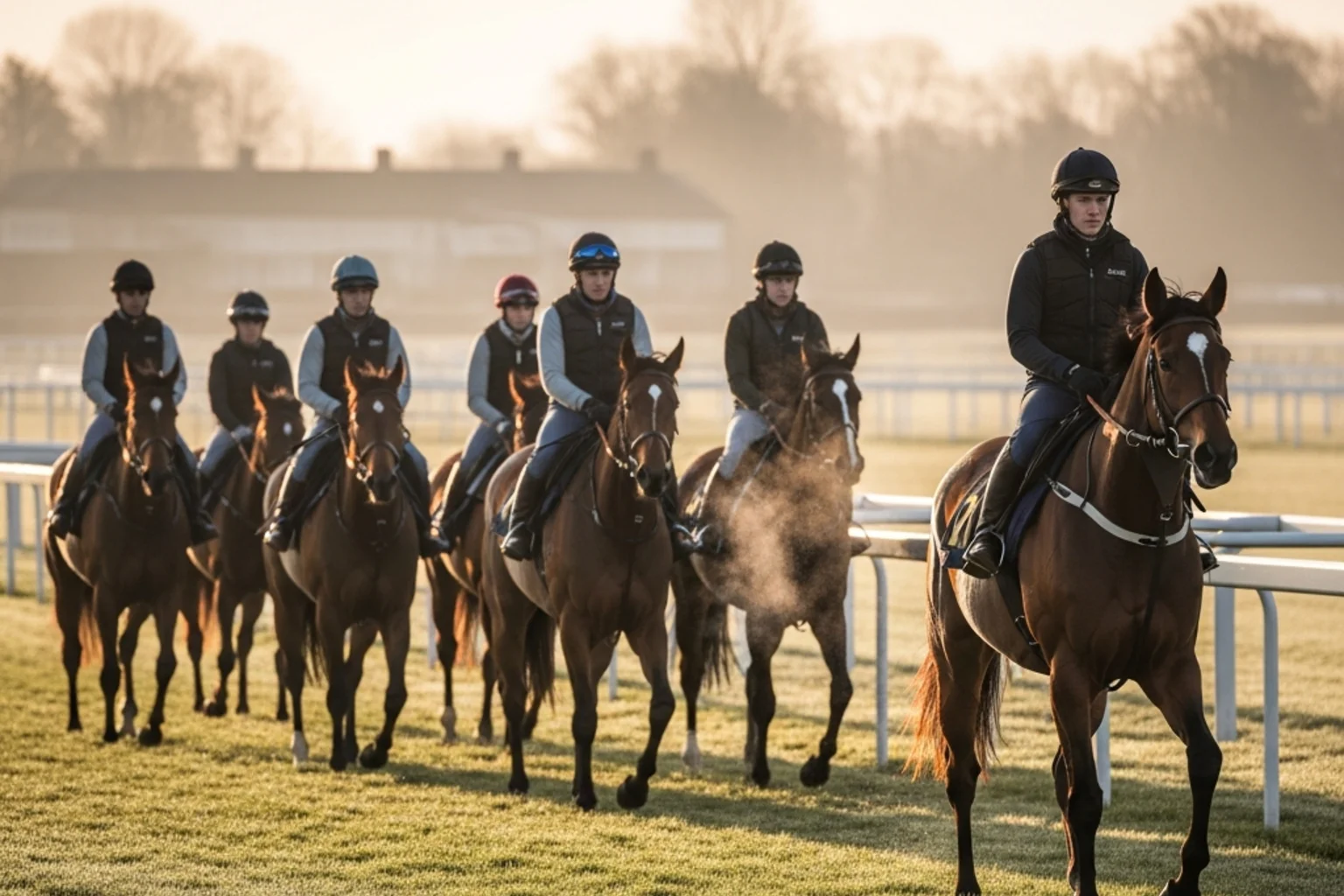
Somerville Lodge, Haggas’s Newmarket base, operates with the facilities and staff to prepare horses for specific seasonal targets. The Lincoln demands a particular readiness: horses must be fit enough to perform at their peak on the first major Saturday of the flat season, when many competitors are still working toward full fitness. Achieving this balance—peak readiness without over-cooking—distinguishes successful Lincoln yards from those whose runners need the race for experience.
Haggas’s gallop routines reportedly calibrate toward early-season targets. While details remain proprietary, the outcomes speak clearly: his Lincoln runners typically run forward from their first appearance. They do not need the blow, do not require the race to sharpen them, and do not fade in the final furlong despite the extended winter break. Whatever preparation protocols produce this result, they work consistently across different horse types and conditions.
Horse selection contributes equally to methodology. Not every horse in the Haggas yard suits the Lincoln; he identifies specific candidates whose profiles match the race’s demands. Typically these horses show a blend of ability and exploitable handicap marks—talented enough to win in good company but not yet rated so highly that weight assignments become prohibitive. The sweet spot around ratings of 95-102 historically produces Lincoln winners, and Haggas positions horses within this range.
Supplementary entries from the yard warrant particular attention. When Haggas pays extra to add a horse to the Lincoln closer to race day, it signals genuine intent rather than speculative option-keeping. Such runners have cleared internal assessments that found them ready, fit, and appropriately rated. Markets typically respond to Haggas supplementary entries with immediate shortening—often correctly.
Horse Profiles
The five Haggas Lincoln winners share certain characteristics despite spanning three decades. All were aged between four and six at the time of victory—the sweet spot for flat handicappers combining physical maturity with residual improvement potential. None were older horses in decline; none were unexposed three-year-olds whose form remained unproven. This age profile aligns with broader Lincoln trends where four and five-year-olds dominate results.
Weight allocations on these winners clustered in manageable ranges. None carried burdensome top weights that would indicate the handicapper had fully assessed their ability. Conversely, none carried featherweights that might suggest limited quality. The middle-ground weights—typically between 8st 10lbs and 9st 6lbs—allowed these horses to demonstrate ability without racing under conditions stacked against them.
Ground preferences varied, demonstrating Haggas’s flexibility rather than narrow targeting. Godwinson won on Good to Soft, while earlier winners handled Good to Firm conditions. This adaptability suggests Haggas selects Lincoln candidates based on race profile rather than ground dependency. Horses who absolutely require specific conditions rarely make ideal Lincoln targets given the race’s unpredictable spring timing and resulting going variability.
Post-Lincoln careers differed substantially. Addeybb ascended to international Group 1 success, proving the Lincoln can attract future stars. Others remained honest handicappers whose Lincoln victories represented career peaks rather than stepping stones. Both patterns validate Lincoln targeting—whether the race launches greater things or provides a prestigious prize for capable but limited performers.
Following Haggas Runners
Blindly backing every Haggas Lincoln runner would produce mixed results. He enters multiple horses in some years, not all intended to win. Distinguishing genuine fancies from kept options requires attention to trainer comments, jockey bookings, and market behaviour. When Haggas speaks positively about a specific entry while remaining neutral on others, the hierarchy becomes clear. Markets usually reflect this hierarchy, though not always proportionally to actual intent.
The value question becomes whether Haggas runners are priced correctly given his edge. Five wins from numerous runners across thirty-plus years represents a strong record but not an overwhelming strike rate. If markets consistently price Haggas runners as if they have double normal chances, backing them blindly underperforms despite the historical success. Value exists when market response undershoots actual probability—which sometimes happens with Haggas’s second or third entries rather than his main fancy.
William Haggas has built the Lincoln Handicap into a personal showcase across three decades. His five victories establish a record that may stand for generations—no other current trainer shows similar dedication to this specific race. For punters, the Haggas factor demands consideration in every Lincoln analysis. The question is not whether to note his runners but how to price their chances relative to market offerings. Sometimes backing Haggas represents value; sometimes opposing him does. Understanding his methods, horse profiles, and preparation approach enables that judgment rather than reaction to reputation alone.
