

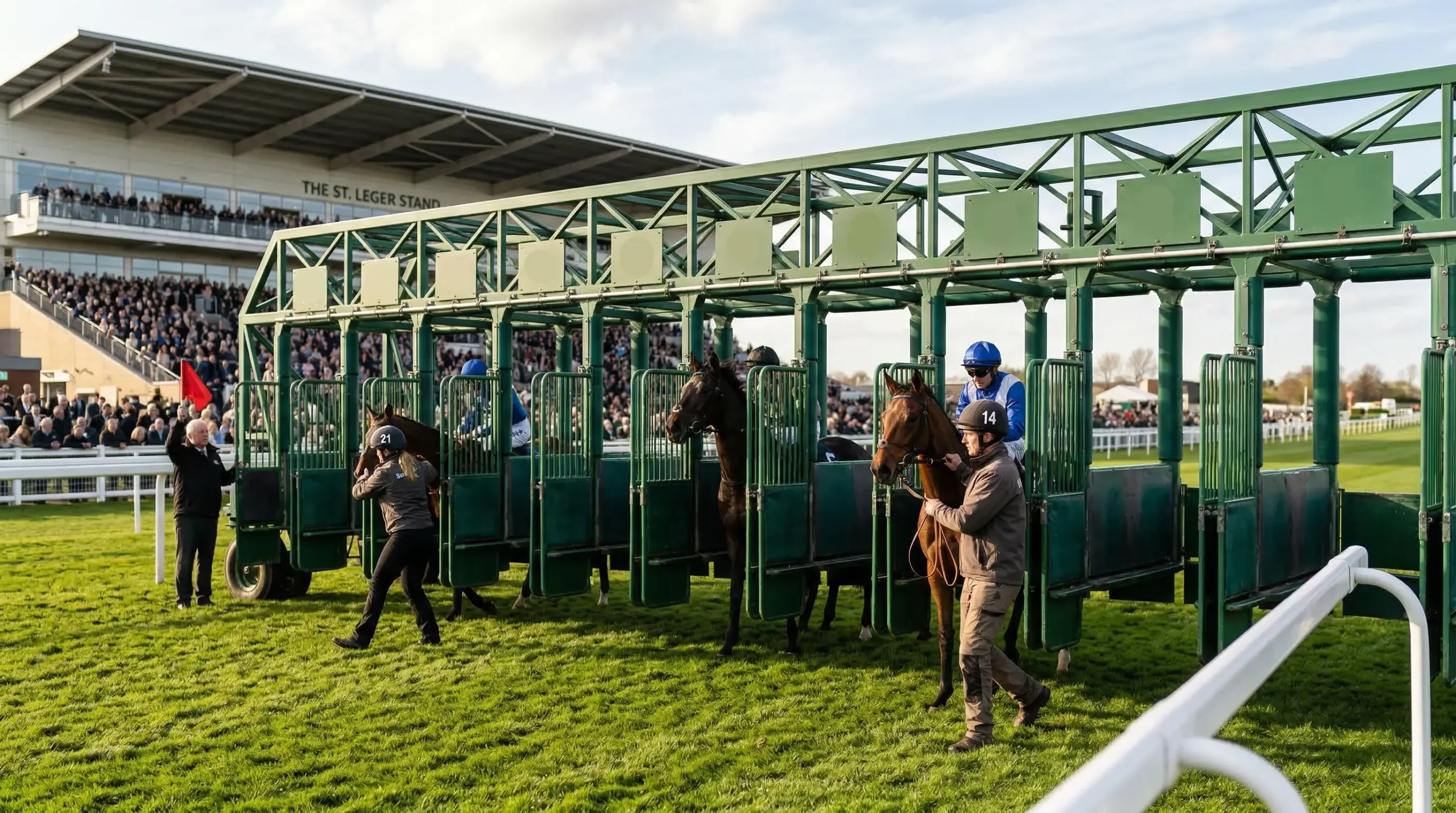
The Lincoln Handicap does not merely begin a new flat racing season — it announces the sport’s shift in tone, tempo, and focus. When the field loads into stalls at Doncaster’s straight mile on the final Saturday of March, it signals that the mud and drama of National Hunt racing must share the stage with the speed and precision of the flat. For British punters, this transition is annual, familiar, and still somehow charged with anticipation every time.
Opening the turf season carries weight beyond the Lincoln’s £150,000 prize fund. Trainers use the race to gauge winter progress. Owners measure early returns on expensive purchases. Jockeys reacquaint themselves with tactical flat racing after months of jumping’s longer, more attritional contests. And bettors face the peculiar challenge of interpreting form that predates the current campaign, often by five months or more.
The Lincoln’s position as curtain-raiser creates distinctive betting dynamics that differ from midsummer handicaps where recent form flows freely. Understanding why this race opens the season — and what that timing means for analysis — separates casual punters from those who extract value from the fixture.
Why Lincoln Opens the Season
The Lincoln Handicap earned its position through history rather than design. When the race ran at Lincoln Racecourse from 1849 to 1964, it traditionally fell on the final Wednesday of March, coinciding with the earliest dates when turf courses could reliably race after winter. Lincoln’s closure in 1964 transferred the race to Doncaster, where it eventually settled into its Saturday slot and retained its status as the first major flat handicap of the year.
Geography plays a role. Doncaster sits far enough north that its turf season starts later than southern tracks, which host all-weather racing throughout winter. The timing creates natural separation — all-weather meetings at Kempton, Lingfield, and Wolverhampton dominate from November through early March, then the turf fixture list expands as ground conditions improve across the country. The Lincoln marks the moment when grass racing reclaims primacy.
Scheduling the season’s first major turf handicap also serves practical purposes for connections. Trainers with horses targeting summer handicaps like the Royal Hunt Cup or the Cambridgeshire need an early benchmark race to assess preparation progress. The Lincoln provides competitive racing without the extreme heat or firm ground that can damage horses later in summer. It functions as a proving ground where reputations are tested and campaign plans adjusted.
The race’s historical prestige reinforced its calendar position. Once established as the traditional opener, the Lincoln attracted stronger fields, which increased its status, which in turn ensured it retained pride of place when fixtures were reorganised over the decades. Tradition and quality became self-reinforcing.
Transition from Jumps
The shift from National Hunt to flat racing represents more than a change in race format. Betting markets recalibrate, media coverage pivots, and the punting calendar reorganises around different fixtures. Jump racing does not end when the Lincoln runs — Cheltenham Festival falls earlier in March, and the Grand National follows in April — but the emphasis begins tilting toward the flat from late March onward.
Attendance patterns reflect this transition. In 2024, jump racing averaged 3,575 spectators per fixture compared to flat racing’s 3,304 average, though both codes saw increases from 2022 baselines. The figures suggest jumping holds a slight edge in per-meeting appeal, but flat racing’s longer season and greater number of fixtures generate higher total engagement across the calendar year.
The British Horseracing Authority’s 2025 Racing Report noted that attendances reached 5.031 million, exceeding five million for the first time since 2019. As the report stated: “There was much to be pleased about in 2025. Our major meetings and races performed strongly, and these events will have a pivotal role to play in attracting more fans to the sport at all levels.” The Lincoln Handicap, as the first major turf fixture, occupies a prominent position in that strategy — it marks the point where casual racegoers who drifted away during winter begin re-engaging with the sport.
For bettors, the transition demands mental adjustment. Jump racing rewards analysis of stamina, jumping ability, and going preferences over marathon distances. Flat handicaps like the Lincoln prioritise speed, weight-carrying ability, and tactical positioning over a mile. The skills overlap but differ in emphasis. Punters who excel during National Hunt season sometimes struggle initially with flat handicaps, and vice versa.
Early Season Form Challenges
The Lincoln presents form analysts with a problem: most contenders have not raced since October or November. Five months of inactivity creates uncertainty that no amount of gallop reports or stable whispers fully resolves. Horses winter differently — some thrive with extended rest, others lose sharpness — and trainers’ updates are optimistic by nature rather than diagnostic.
Trial races offer partial solutions. Some Lincoln contenders tune up at all-weather meetings in January or February, providing a fitness indicator if not a direct turf form line. Others contest the Lincoln Trial at Wolverhampton or equivalent preparatory races. These outings confirm a horse’s wellbeing without necessarily predicting how they will perform when the surface, field size, and competition level all change simultaneously.
Handicap marks add further complexity. Official ratings freeze over winter, meaning a horse that improved dramatically through autumn carries the same mark into the Lincoln as it did months earlier. Conversely, a horse whose autumn form flattered might be exposed when facing fresher opposition. The assessor cannot account for private training performances, leaving punters to interpret fragmentary evidence about winter progress.
This uncertainty explains why favourites win the Lincoln less frequently than in midsummer handicaps where form is current and stacked. Only one of the last eleven winners was the market favourite, a strike rate far below what you would expect from betting on the shortest-priced runner in comparable handicaps later in the season. The form void creates value for those willing to look beyond obvious contenders.
Trainer records and stable form become proxy indicators when horse-specific data is scarce. If a yard sends several early-season winners across different meetings in March, their Lincoln runner warrants closer attention regardless of individual form gaps. Patterns at stable level substitute for patterns at horse level when direct evidence is unavailable.
Key Early Season Meetings
The Lincoln does not stand alone. The Doncaster meeting that hosts the race spans multiple days and includes other significant contests that shape early-season narratives. Pattern races at the same fixture provide benchmarks for Classic hopefuls, while supporting handicaps offer Lincoln clues through shared pace scenarios and going conditions.
April brings the Craven Meeting at Newmarket, the Greenham Stakes at Newbury, and the first Group races that sort contenders for the Guineas. By early May, the Classic trials at Chester and York clarify the three-year-old picture. Throughout this period, the Lincoln’s result resonates — horses who ran well often reappear in summer handicaps, and trainers whose Lincoln entries performed strongly typically maintain that form across the early flat calendar.
The Grand National, though a jump race, remains relevant to Lincoln punters. The Spring Double — backing a horse to win both the Lincoln and the Grand National — once captivated betting pools when both races fell on the same day. Modern scheduling separates them by two weeks, but the concept endures among punters who enjoy long-shot combination bets. Monitoring Lincoln market moves alongside National ante-post activity reveals where speculative money flows during late March.
Understanding the Lincoln as part of a broader early-season ecosystem, rather than an isolated event, improves both selection and staking decisions. It is the overture, not the opera.
The Lincoln Handicap announces more than a race — it signals the return of turf, speed, and tactical flat racing to British racecourses. Its position as season opener creates unique analytical challenges and betting opportunities that reward those prepared to adapt their approach to early-season uncertainty.
