
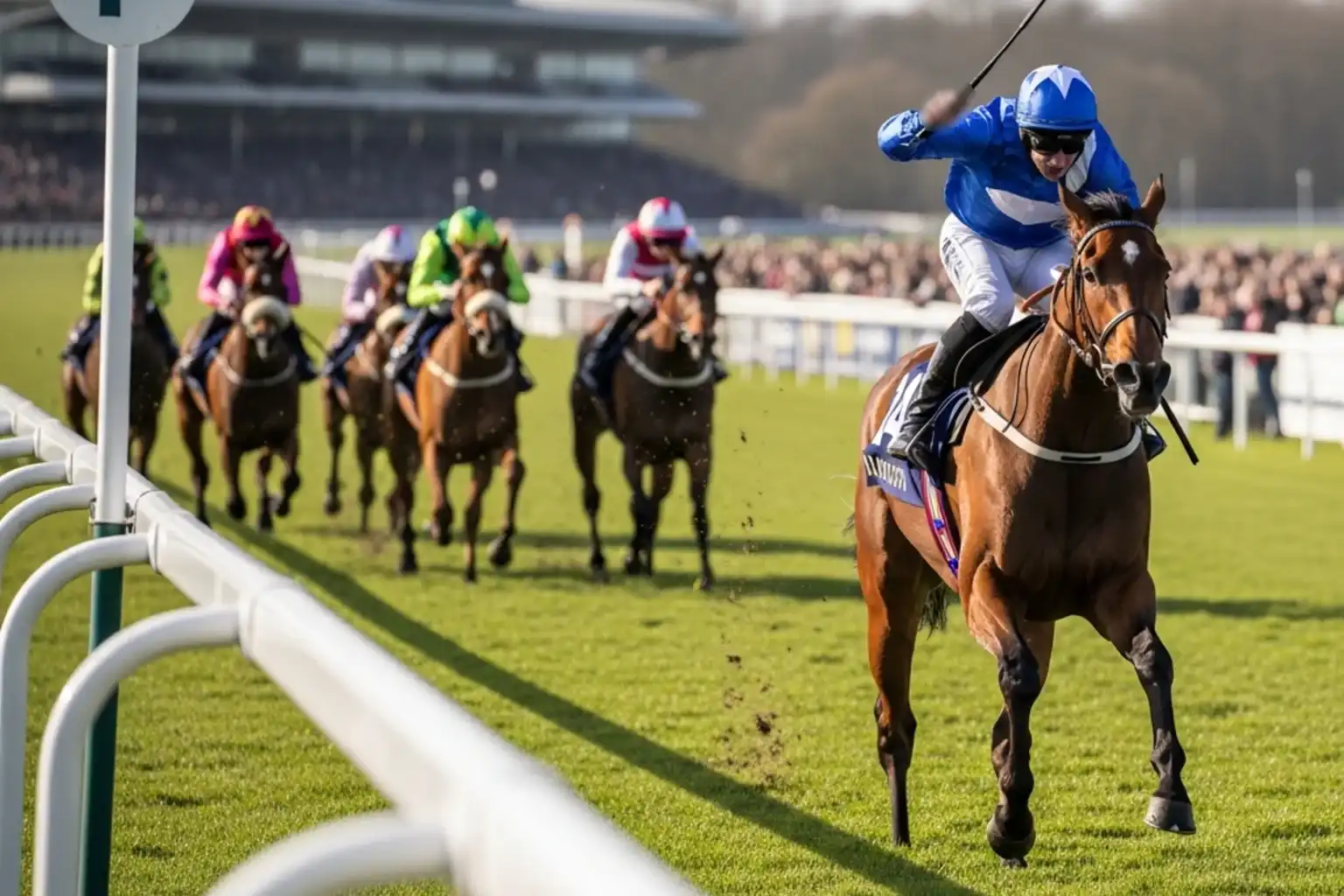
The Lincoln Handicap has become a race where outsiders not only compete but consistently win. The phrase long-shot Lincoln has entered racing vocabulary because big-priced winners turn up with remarkable frequency. For punters willing to look beyond the obvious contenders, the race offers genuine opportunities to land substantial returns from modest stakes.
Seven of the last eleven Lincoln winners started at odds of 12/1 or higher, according to The Stats Don’t Lie. Three recent winners went off at 18/1 or longer. These are not flukes but a pattern that reflects the race’s competitive nature and the difficulty bookmakers face in accurately pricing a field of twenty diverse handicappers.
Identifying which outsiders have genuine chances requires more than hoping for a surprise. Certain characteristics separate viable long shots from no-hopers. Understanding what makes an outsider dangerous in the Lincoln helps punters focus their attention on horses the market has undervalued while avoiding those priced long for good reasons.
The 12/1+ Pattern
The dominance of double-figure prices in recent Lincoln results demands attention. When nearly two-thirds of winners start at 12/1 or higher, the market is systematically undervaluing a significant portion of the field. This is not an accident of small sample sizes but a persistent feature of the race that punters can exploit.
Why do outsiders win so often? The Lincoln’s structure creates conditions that favour them. Twenty runners, all theoretically equalised by handicap weights, compete on a straight mile where any horse can find room to run. Unlike races with turns and tight finishes, the straight course allows outsiders to express their ability without needing to navigate tactical complexity.
The timing adds another dimension. Many horses arrive at the Lincoln after winter breaks, their current form uncertain. The market prices horses based on autumn performances, but winter improvement can transform an also-ran into a genuine contender. These improving horses often remain at longer odds because their improvement has not been demonstrated on the racecourse.
Bookmaker over-rounds in the Lincoln range from 117% to 140%, with recent years trending toward the higher end. When bookmakers build in extra margin, they typically do so by shortening favourites and mid-range horses while leaving outsiders at generous prices. This structural feature of market pricing creates value at the bottom of the market even before considering individual horses.
The 12/1 threshold is not magical but useful. It separates horses the market considers genuine contenders from those it views as unlikely winners. Given how often the market gets the Lincoln wrong, focusing on horses it underrates makes logical sense. The 12/1 line identifies candidates that merit closer inspection.
Each-way betting amplifies the outsider strategy. A horse at 20/1 pays 5/1 for a place. In a race where the favourite fails to win 72% of the time, place opportunities abound. Outsiders who hit the frame but do not win still generate returns that compensate for the majority who miss out entirely.
Profile of a Lincoln Outsider
Not every long shot has a realistic chance. Separating playable outsiders from hopeless causes requires identifying which characteristics correlate with unexpected success. The data suggests several factors that winning outsiders typically share.
Age matters even among outsiders. Successful long shots are usually four or five years old, fitting the broader pattern of Lincoln winners. An outsider aged seven or eight carries the burden of age against it regardless of price. Focus on younger horses whose improvement might not yet be fully reflected in their handicap marks.
Weight provides another filter. Winning outsiders typically carry between 8st 10lbs and 9st 4lbs, similar to favourites who win. The difference is that outsiders in this weight range are rated lower by the market despite carrying competitive weights. A horse at 25/1 carrying 9st 0lbs has the same burden as a horse at 8/1 carrying 9st 0lbs, but the market sees them very differently.
Draw position affects outsider viability. A long shot drawn badly on the unfavoured side faces a double disadvantage: the market dismisses it and the draw works against it. Conversely, an outsider with a favourable draw has one variable working in its favour, which can prove decisive in a competitive handicap.
Trainer patterns reveal which stables land Lincoln outsiders. Some trainers specialise in producing ready-to-run horses off breaks, arriving at the first big handicap of the season with horses the market underestimates. William Haggas has won five Lincolns, not always with the favourite, demonstrating how trainer preparation can overcome market expectations.
Form from the previous autumn requires careful interpretation. A horse who finished its three-year-old campaign improving might be significantly better as a four-year-old despite no recent evidence. Look for horses whose last runs suggested more to come rather than those who appeared to have reached their limit.
Identifying Hidden Form
Hidden form refers to ability that exists but has not been fully demonstrated on the racecourse. The Lincoln, coming after winter breaks, offers opportunities for horses with hidden form to emerge. Punters who can identify these horses before the market catches on gain a significant edge.
Lightly-raced horses often carry hidden form. A horse with five or six career runs has not given the handicapper as much information as one with twenty runs. The official rating might underestimate the horse’s true ability, creating an opportunity. Outsiders with limited experience but suggestions of talent in their form figures merit attention.
Horses who showed improvement late in their previous campaign carry form that has not yet been reflected in their handicap marks. The assessor works with historical data; a horse improving rapidly might have moved beyond its rating before the Lincoln. Identifying this improvement requires reading between the lines of form figures.
Different running styles can obscure ability. A hold-up horse who has been outpaced in fast-run races might suit the Lincoln’s typically strong gallop. A front-runner who faded against strong opponents might sustain the pace in a less competitive race. Matching running style to likely race conditions reveals form that standard analysis might miss.
Ground versatility extends the pool of viable outsiders. A horse who has only run on fast ground but shows breeding for soft might handle a cut in the ground better than the market expects. Conversely, a confirmed mud-lover might be dismissed if good ground is expected but could outperform if conditions change. Flexibility indicates hidden ability to cope with varying scenarios.
Work reports and stable information occasionally leak into public view. A horse working exceptionally well might shorten from 33/1 to 20/1 based on whispers, but the adjustment may not fully reflect the improved chances. Paying attention to market moves can identify where inside information suggests hidden form.
Staking on Outsiders
Backing outsiders requires adjusted staking strategies. The low strike rate, even for outsiders who fit positive criteria, means most bets will lose. Staking must account for this reality while preserving bankroll for the occasions when selections win.
Level stakes provides a straightforward approach. Betting the same amount on each qualified outsider removes the temptation to chase losses or overcommit on appealing selections. Over time, the wins at long prices compensate for the losses, provided selection quality remains consistent.
Percentage staking limits exposure to any single bet. Risking 1% or 2% of bankroll on each outsider ensures that a losing streak does not deplete funds before a winner arrives. The mathematics of outsider betting assumes many losses before infrequent wins; percentage staking absorbs this variance.
Multiple selections in the same race require stake adjustment. If backing two or three outsiders in the Lincoln, the combined stake on the race should not exceed what you would risk on a single selection. Spreading money across several outsiders improves the chance of hitting a winner but should not inflate total exposure.
Each-way staking on outsiders increases bet frequency but reduces average returns. A 20/1 winner pays £420 from a £20 win bet but only £360 from a £10 each-way bet. However, the each-way approach collects on place finishes, smoothing returns across the season. Both approaches have merit depending on individual risk tolerance.
Recording results and reviewing performance allows for strategy refinement. Tracking which types of outsiders produce winners and which do not helps focus future selections. The Lincoln arrives once a year, so maintaining records across multiple seasons builds the sample size needed for meaningful analysis.
The Lincoln Handicap rewards punters who embrace outsiders. The 12/1+ pattern is not a quirk but a consistent feature of a race where the market routinely underestimates portions of the field. Identifying which outsiders have genuine chances requires analysis beyond price alone, but the potential returns justify the effort.