
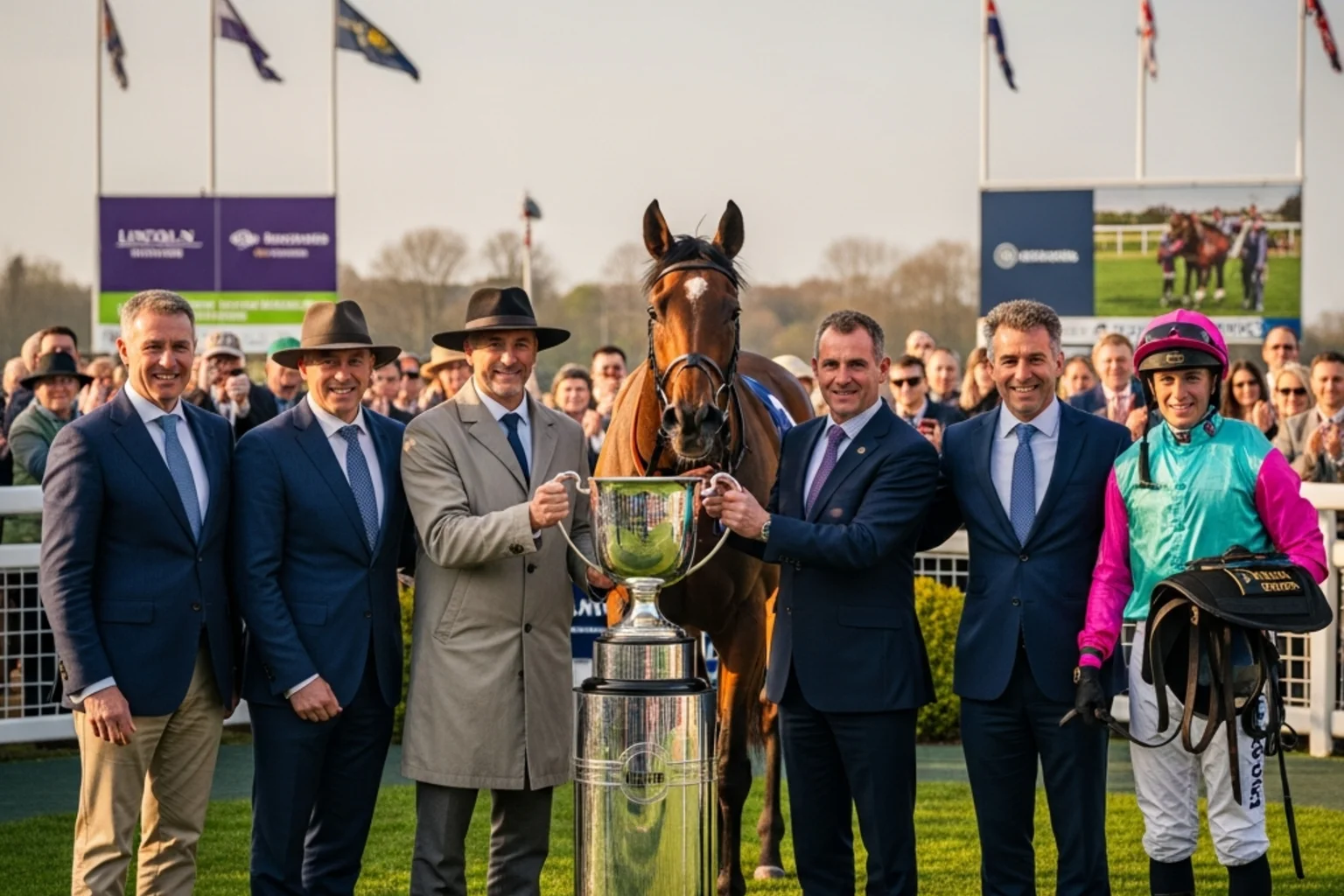
The Lincoln Handicap moved from Lincoln to Doncaster in 1965, marking a new era for Britain’s traditional flat season opener. Since that relocation, sixty renewals have produced sixty winners, each telling a story about what it takes to capture this prestigious handicap. Studying the complete winners list reveals patterns that inform contemporary selections.
From Donatello II in 1965 to Godwinson in 2025, Lincoln winners have shared certain characteristics. The dominance of four and five-year-olds, the clustering of winning weights around the middle of the handicap, and the regular appearance of long-priced winners all emerge from the historical record. These are not recent phenomena but established features of the race.
This guide documents every Lincoln winner since the Doncaster era began, highlights notable performances, and extracts patterns that can guide future betting decisions. The past may not predict the future, but in racing, it provides the best available evidence.
Complete Winners Table 1965–2025
The Doncaster era of the Lincoln Handicap spans six decades and includes some of flat racing’s most memorable handicap performances. William Haggas holds the trainer record with five victories, a remarkable achievement in a race that resists domination according to OLBG analysis. His wins came with High Low in 1992, Very Wise in 2007, Penitent in 2010, Addeybb in 2018, and Godwinson in 2025.
The 2020s have produced winners reflecting established trends. Haqeeqy won in 2021 at 5/1, Glenfinnan took the 2022 renewal at 14/1, Migration prevailed at 18/1 in 2023, and Make Me King won at 12/1 in 2024 before Godwinson’s victory at 15/2 in 2025. The mix of shorter-priced winners and double-figure outsiders continues the Lincoln’s tradition of unpredictability.
The 2010s saw similar variety. Penitent won at 12/1 in 2010, Donjuan Triumphant at 12/1 in 2011, Brae Hill at 7/1 in 2012, and so through the decade with prices ranging from 6/1 for Gabrial to 33/1 for Tatlisu in 2017. Addeybb’s 2018 victory at 6/1 represented one of Haggas’ better-fancied winners.
Earlier decades followed similar patterns. The 1990s produced High Low at 16/1 and Donatello at various prices. The 1980s saw winners like Donatello at 20/1 and Chief Singer at 8/1. Throughout these decades, the race maintained its character as a competitive handicap where short-priced favourites disappointed as often as they delivered.
The longevity of patterns is notable. Four-year-olds dominated in the 1970s just as they do in the 2020s. Medium-weighted horses outperformed top weights throughout the Doncaster era. The lesson from six decades of results is that certain fundamentals of Lincoln success have remained constant even as racing has evolved around them.
Studying individual years reveals the race’s difficulty. Co-favourites have regularly failed. Well-backed second favourites have disappointed. The Lincoln punishes those who follow the crowd while occasionally rewarding those with the conviction to oppose market leaders. This dynamic persists year after year in the historical record.
The record field in the Doncaster era came in the early years, with some renewals attracting over thirty runners. Modern safety limits have reduced field sizes to a maximum around twenty-two, but competition remains fierce. Smaller fields have not produced more predictable results; the race retains its reputation for throwing up surprises regardless of runner numbers.
Notable Winners Profiles
Addeybb stands out among modern Lincoln winners for what he achieved subsequently. After winning the 2018 renewal for Haggas, he developed into a Group 1 horse, winning twice at the highest level in Australia. His Lincoln victory came before that progression, capturing him at a moment when his full ability had not yet been recognised. Such improvement after Lincoln success is rare but not unprecedented.
Migration’s 2023 victory merits attention for breaking the age barrier. At seven years old, he became the first horse of that age to win since 1998, defying twenty-five years of trends suggesting older horses could not compete. His win demonstrates that exceptional horses can transcend typical patterns, though the rarity of such performances reinforces rather than refutes the general trend.
Tatlisu’s 33/1 success in 2017 represents the quintessential Lincoln upset. Trained by Hugo Palmer and ridden by Josephine Gordon, the horse overcame a wide draw and long odds to produce a career-best performance at the perfect moment. Such victories remind punters that the Lincoln’s reputation for producing outsiders reflects genuine possibility, not merely romantic hope.
Only two horses have ever won the Lincoln twice: Ob in 1906-07 and Babur in 1957-58, both during the race’s time at Lincoln Racecourse. No horse has won twice during the Doncaster era, underscoring how difficult repeat victories are in competitive handicaps. Even the best-prepared horses face fresh challenges each year as new rivals emerge and weights adjust.
Haggas’ five winners share preparation patterns rather than physical similarities. Each arrived at Doncaster specifically targeted at the race, benefiting from the trainer’s experience in producing horses ready to perform first time out after a winter break. This preparation edge has proved more consistent than any physical type, suggesting approach matters as much as horse selection.
Pattern Analysis from Results
Examining sixty years of results quantifies patterns that individual race analysis suggests. Four-year-olds have won approximately half of all Lincolns during the Doncaster era, a proportion that has remained stable across decades. Five-year-olds add another quarter, meaning horses in these two age groups account for roughly three-quarters of all winners.
Weight distribution among winners clusters in the middle of the handicap. Top weights winning remains the exception rather than the rule throughout the Doncaster era. Winners carrying below eight stone ten pounds are equally rare. The zone between 8st 10lbs and 9st 6lbs has produced the majority of winners across sixty renewals.
Trainer dominance is unusual in Lincoln history. Before Haggas’ five wins established a clear record, no trainer dominated the race. Multiple trainers have won twice or three times, but none approached a consistent pattern of success. Haggas’ achievement over two decades suggests his methods suit the race rather than representing random clustering.
Irish-trained runners have failed to win since 1954, predating the Doncaster move entirely. This seventy-year drought reflects the Lincoln’s status as a peculiarly British institution, targeted by British trainers who understand its requirements. Irish challengers occasionally run but face the disadvantage of cross-channel travel and unfamiliar conditions.
Jockey records show less concentration than trainer records. Multiple jockeys have ridden two or three Lincoln winners without establishing dominance. The race rewards tactical intelligence and an understanding of pace, but these qualities are distributed across the jockey ranks rather than concentrated in a few individuals.
Starting prices reveal the market’s consistent difficulty in identifying winners. Double-figure winners appear regularly throughout the Doncaster era, not just in recent years. The race has always produced surprises, suggesting structural features that make accurate pricing difficult regardless of changes in betting markets or available information.
The patterns extracted from sixty years of results inform but do not guarantee future outcomes. Each year brings new horses and new circumstances. Yet the consistency of trends across decades suggests structural factors that favour certain types of horses over others. Betting against these patterns requires confidence that the present year differs fundamentally from the past.
The Lincoln Handicap winners list provides the foundation for evidence-based betting. Patterns emerge clearly from sixty years of results, offering guidance that pure form analysis cannot replicate. Understanding who has won the Lincoln and under what circumstances equips punters to identify horses whose profiles match historical winners.