
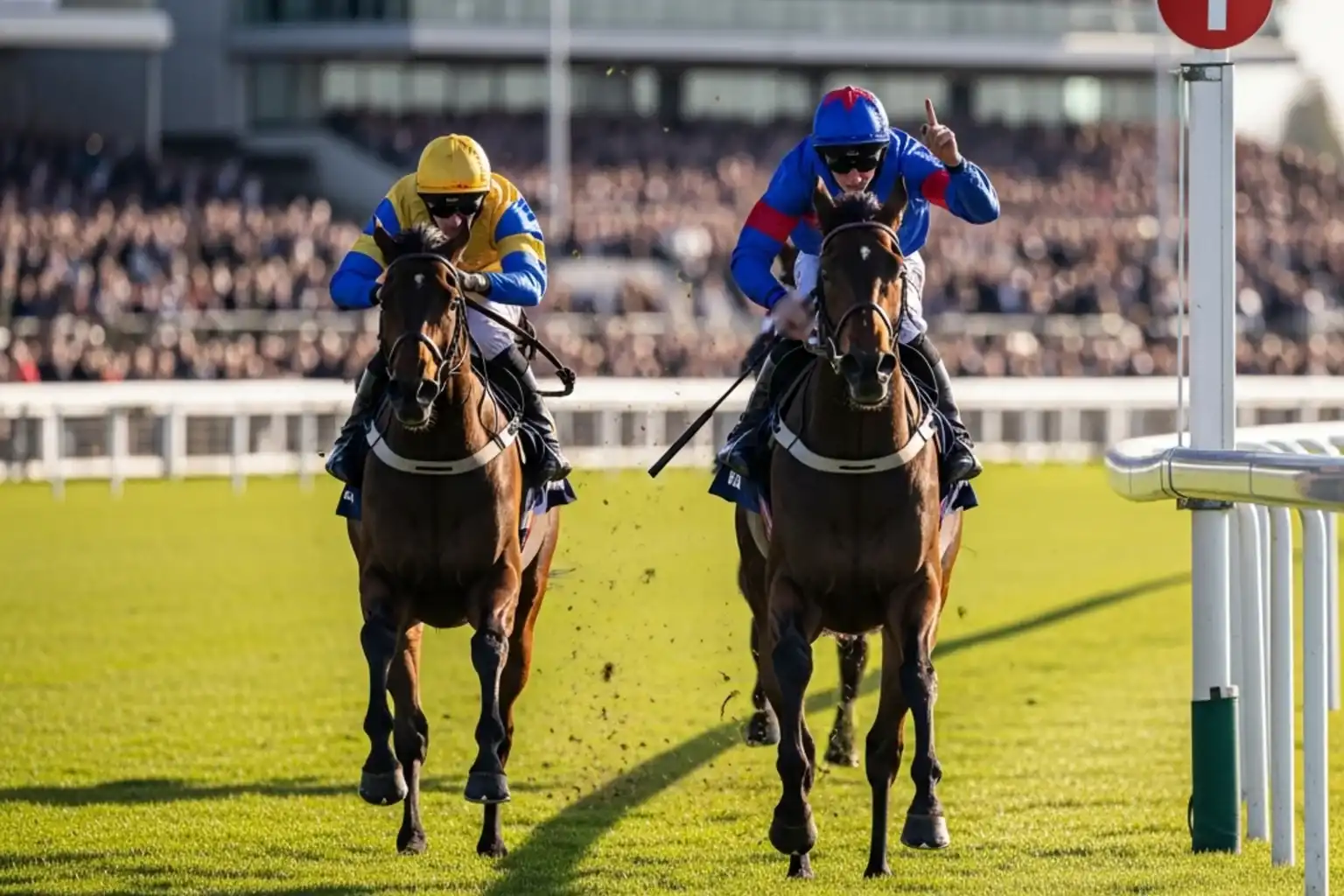
The 2025 Lincoln Handicap delivered a result that reinforced several established trends while providing fresh insights for punters approaching the 2026 renewal. Godwinson’s victory for trainer William Haggas extended his remarkable record in the race to five wins, cementing his status as the Lincoln’s most successful trainer in modern history.
Run on good to soft ground at Doncaster on the final Saturday of March, the race attracted a field of twenty-two runners seeking to open their flat campaigns with victory in Britain’s traditional season opener. The result rewarded those who had studied the patterns that consistently define Lincoln success.
This review examines how the 2025 race unfolded, profiles the winner, assesses key performances from the placed horses, and extracts lessons that can inform betting strategies for future renewals. Understanding what happened in 2025 provides the most recent data point in the ongoing analysis of Lincoln Handicap trends.
Race Recap: How It Unfolded
The 2025 Lincoln Handicap began with the stalls opening to release twenty-two runners across the width of Doncaster’s straight mile. A strong headwind blowing into the faces of the runners immediately established the tactical context, making front-running an energy-sapping proposition and favouring those who could find cover in behind.
The early pace was honest without being suicidal. Several horses disputed the lead through the first furlong, eventually settling into a rhythm that strung the field out across the track. The stands-side rail, typically advantaged on ground with any ease, attracted those drawn high while low-drawn horses faced the choice of crossing the track or accepting potentially slower ground.
Godwinson, drawn away from the favoured side, demonstrated the tactical flexibility that characterised his victory. Jockey Cieren Fallon tucked in behind the early pace, conserving energy while allowing the headwind to take its toll on those in front. The patient approach allowed the horse to travel smoothly through the middle stages without expending unnecessary effort.
Entering the final two furlongs, the race began to take shape. The early leaders started to tire, their front-running efforts exacting a toll in the demanding conditions. Godwinson was switched to find a clear run, moving through the field with a sustained finishing effort rather than a sudden burst of acceleration.
The winning time of 1:40.09, recorded on good to soft ground, reflected the testing conditions. This compared unfavourably to the race record of 1:36.51 set by Expresso Star in 2009 on good to firm ground, illustrating how ground conditions affect race dynamics and the type of horse that prevails.
The finish saw Godwinson get up on the line to deny Oliver Show, with the pair separated by a diminishing margin. The closeness of the finish underlined the competitive nature of the race and the fine margins that determine victory in handicaps of this calibre.
Godwinson Profile
Godwinson arrived at the 2025 Lincoln as a five-year-old son of Ulysses, trained by William Haggas at Somerville Lodge in Newmarket. His profile fitted established Lincoln trends: the right age, carrying weight within the winning range, prepared by a trainer with an unmatched record in the race.
His form heading into the race included solid performances in competitive handicaps during 2024, establishing him as a horse capable of winning a prize of the Lincoln’s calibre. The winter break allowed Haggas to prepare him specifically for this target, arriving at Doncaster fresh but fit.
The victory extended Haggas’s Lincoln record to five wins, a remarkable achievement that sets him apart from every other trainer in the Doncaster era. His previous winners included High Low in 1992, Very Wise in 2007, Penitent in 2010, and Addeybb in 2018. The seven-year gap between Addeybb and Godwinson demonstrated that Haggas’s success came through consistent application of principles rather than a concentrated purple patch. Speaking after the race, Haggas reflected on his remarkable tally: “That’s five now, which is fantastic. We always try to find one for this race. Sometimes it comes off, sometimes it doesn’t – but this year, we got it right. Hopefully, it’s a sign of things to come for the season ahead.”
Godwinson’s starting price of 15/2 placed him in the mid-range of the market, neither a heavily-backed favourite nor a rank outsider. This price reflected his credentials without fully accounting for the trainer’s exceptional record in the race. Those who weighted the Haggas factor appropriately found value that the wider market missed.
The horse’s tactical versatility proved crucial. Though capable of racing prominently, he showed the maturity to accept restraint when conditions demanded it. This adaptability, often a hallmark of Haggas-trained horses, allowed Fallon to execute the patient ride that the headwind conditions required.
Key Performances
Oliver Show’s second-place finish confirmed him as a progressive handicapper whose improvement had not yet reached its ceiling. Trained by George Boughey, the horse had returned from a winter break in Bahrain showing that the change of scenery had done him good. His trainer noted afterwards that he remained seriously progressive, suggesting future targets at the highest level of handicap competition.
The placed horses shared characteristics with the winner. Both were in their prime racing years, carried competitive weights, and were trained by handlers who understood the demands of early-season handicaps. Their close finish suggested the handicapper had assessed them accurately, with the weight difference between them reflecting a genuine but marginal ability gap.
Several fancied runners disappointed, as is typical in Lincolns. The favourite failed to fire, continuing the race’s pattern of producing results that confound market confidence. Those who had placed significant faith in market leaders found their money lost, while those who had spread their bets across multiple outsiders at least had runners finishing close to the places.
The draw played its expected role, with those on the stands side generally performing better than those stuck on the far rail. However, Godwinson’s victory from an unfavourable draw demonstrated that quality could overcome positional disadvantage when conditions and tactics aligned correctly.
Hold-up horses dominated the finish, as the headwind conditions predicted. Front-runners who had contested the early lead faded in the closing stages, their efforts against the wind leaving them with insufficient reserves for the finish. The pace scenario rewarded patient jockeyship and horses with strong finishes.
Lessons for 2026
The 2025 result reinforced patterns that have defined the Lincoln for years. Four and five-year-olds continue to dominate, with Godwinson’s five-year-old profile fitting the template precisely. Punters approaching the 2026 renewal should continue filtering on age, eliminating horses outside the prime age bracket unless exceptional circumstances apply.
The Haggas factor deserves even greater weight after his fifth victory. While no guarantee exists that he will saddle another winner, his record demonstrates systematic understanding of the race’s demands. Any Haggas runner in the 2026 Lincoln warrants serious consideration regardless of market pricing.
Weather conditions must inform tactical predictions. The 2025 headwind transformed the race into a hold-up contest, but a tailwind would produce entirely different dynamics. Checking the forecast and adjusting expectations for pace scenarios should be standard practice as race day approaches.
Draw analysis remains relevant but not deterministic. Godwinson overcame an unfavourable draw through tactical intelligence and a quality finish. Those drawn well hold structural advantages, but class and preparation can compensate for positional disadvantage when other factors align.
The favourite’s failure continued a long-running pattern. Only one of the last eleven favourites has won, and the 2025 result extended this trend. Punters should approach the 2026 market leader with appropriate scepticism, recognising that the shortest price does not indicate the highest probability of success in this particular race.
The 2025 Lincoln Handicap provided another data point confirming established trends while showcasing how tactical intelligence and quality preparation can overcome disadvantages. Godwinson’s victory for Haggas and Fallon rewarded those who had studied patterns and applied them to their selections. The lessons from 2025 inform the approach to 2026, where the same fundamental principles will likely apply once again.