
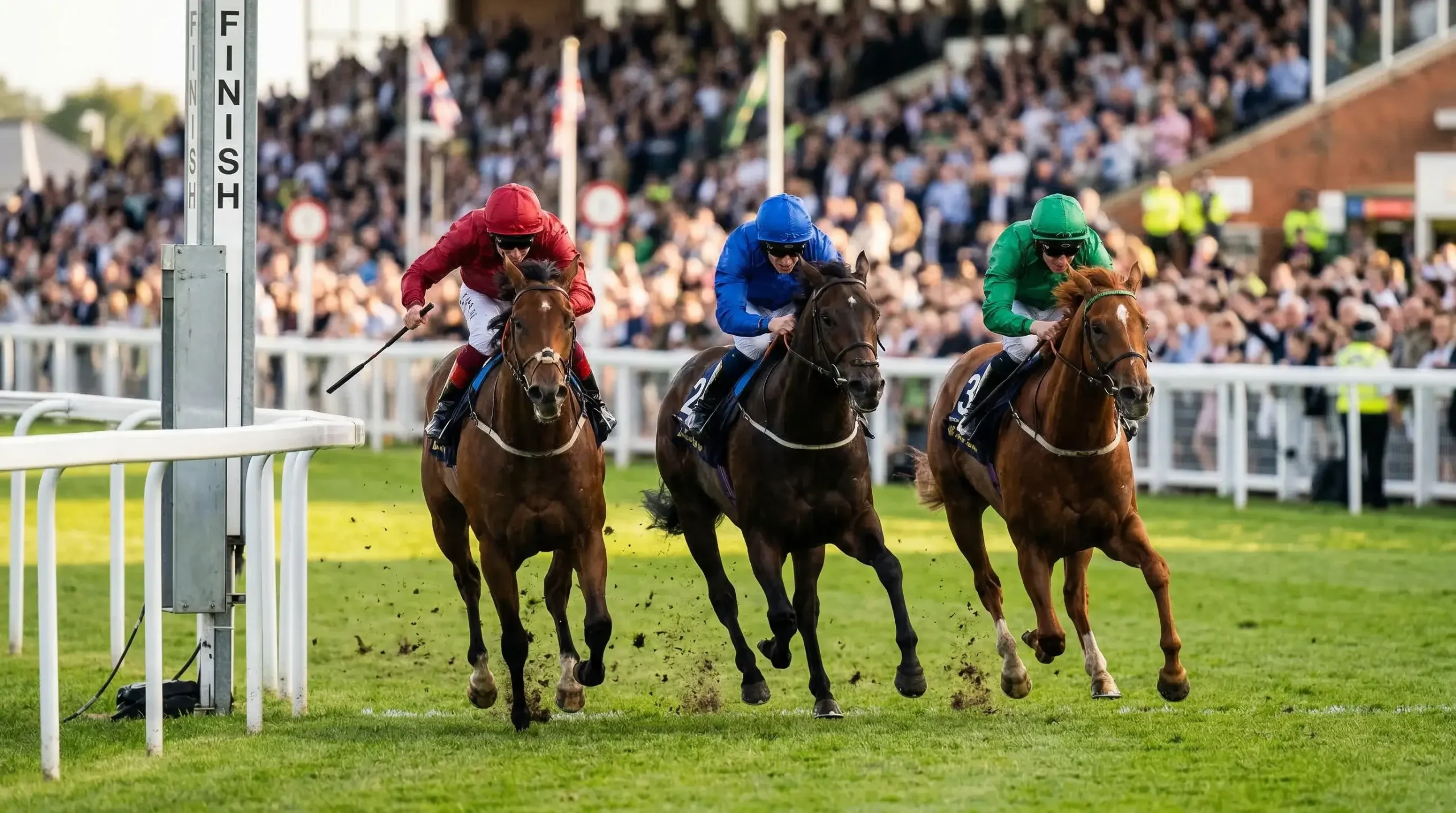
The Lincoln Handicap, with its fields of twenty runners or more, creates conditions where each-way betting becomes particularly attractive. When only one horse can win but four might place, the mathematics shift in ways that favour the punter who understands how place terms operate. Seven of the last eleven Lincoln winners started at odds of 12/1 or higher, which tells a story about the race’s unpredictability and the potential for place returns even when the win bet falls short.
Each-way betting divides a stake into two equal parts: one backing the horse to win, the other backing it to place. This structure provides insurance against near misses while still offering substantial returns if the selection wins. In large-field handicaps where the market leader fails to win roughly 70% of the time, each-way betting offers a way to participate profitably without requiring precise winner identification.
Understanding when each-way represents value requires knowing the mechanics, how place terms change with field size, and how to calculate whether the numbers work in your favour. This guide covers each element for punters considering the each-way approach to the Lincoln.
Each-Way Mechanics: How It Works
An each-way bet consists of two separate bets of equal value. A £10 each-way stake means £10 on the horse to win and £10 on the horse to place, for a total outlay of £20. If the horse wins, both bets pay out. If the horse places but does not win, only the place bet pays out and the win stake is lost. If the horse fails to place, both stakes are lost.
The place part of the bet pays at a fraction of the win odds, with the fraction determined by the type of race and number of runners. Standard each-way terms for handicaps with sixteen or more runners are one quarter of the odds for the first four places. This means a horse at 16/1 would pay 4/1 for a place, plus the return of the stake.
Returns calculation follows straightforward arithmetic. If you back a horse each-way at 20/1 with £10 each-way (£20 total stake) and it wins, you receive £210 from the win bet (20 x £10 + £10 stake) plus £60 from the place bet (5 x £10 + £10 stake at quarter odds), for a total return of £270 and profit of £250. If the same horse places but does not win, you receive only the £60 place return, resulting in a net loss of £60 on the total £20 stake.
The break-even dynamics of each-way betting depend on the odds. At shorter prices, the place portion of the bet returns relatively little compared to the stake, making each-way less attractive. At longer prices, the place return becomes substantial enough to provide meaningful compensation for a near miss. This is why each-way betting finds its natural home in competitive handicaps with long-priced runners.
Some bookmakers offer enhanced place terms on selected races, paying out on five or even six places instead of the standard four. These promotions increase the value of each-way bets but require careful reading of terms and conditions to confirm which races qualify and what the place fraction will be.
Place Terms in 20+ Runner Fields
The Lincoln Handicap regularly attracts fields exceeding twenty runners, which triggers standard each-way terms of one quarter the odds for four places with most bookmakers. This represents the most favourable place terms commonly available in flat racing handicaps and creates a structural advantage compared to smaller-field races where only two or three places pay.
Four-place terms in a twenty-runner field mean one in five horses will trigger a place payout, or 20% of the field. Compare this to a twelve-runner race paying three places at one fifth the odds, where 25% of runners place but at worse odds. The Lincoln’s combination of large field size and quarter-odds terms creates a sweet spot for each-way punters.
The mathematics favour horses whose implied place probability exceeds what the bookmaker is offering. If you believe a horse has a 30% chance of placing in a field of twenty, and the bookmaker is offering quarter odds on a 16/1 shot, the place bet alone carries expected value. The 4/1 place odds imply a 20% chance, meaning any assessment of placing probability above that creates overlay.
Field size affects place calculation directly. A twenty-runner handicap with four places means finishing fourth triggers the same payout as finishing second. This flatness in place returns means horses need not necessarily have strong win prospects to offer each-way value. A consistent performer who reliably finishes in the first quartet can provide positive expectation through the place component alone.
Calculating Each-Way Value
Determining whether an each-way bet offers value requires assessing both the win and place components separately. The win portion is straightforward: compare your assessment of the horse’s winning probability to the implied probability of the odds. If you think a 16/1 shot has an 8% chance of winning rather than the implied 5.9%, the win bet has value.
The place calculation requires estimating how often the horse will finish in the first four without winning. Historical analysis of Lincoln results suggests that horses finishing second, third or fourth often come from similar parts of the betting market as winners. This makes intuitive sense in a competitive handicap where margins between placed horses are often small.
Industry economics reflect this dynamic. The Horserace Betting Levy Board Annual Report 2024-25 noted that while levy income reached almost £109 million—the fourth successive year of increase and the highest since 2017—betting turnover on British racing continues to fall. Value exists where your assessment differs from the market’s, and each-way betting provides two opportunities to exploit that discrepancy.
A practical approach involves setting a minimum odds threshold below which each-way betting loses its appeal. Many experienced punters suggest 8/1 as a floor, below which the place return relative to stake becomes too thin. Others set higher thresholds at 10/1 or 12/1, arguing that each-way money is better deployed on longer-priced selections where the place insurance has meaningful value.
The relationship between win price and place value is not linear. A horse at 33/1 offers place odds of 8/1, while a horse at 16/1 offers place odds of 4/1. The longer-priced horse’s place bet returns proportionally more for a place, making each-way more attractive on outsiders than on market principals, provided you have reason to believe the outsider has genuine place claims.
When Each-Way Makes Sense
Each-way betting suits the Lincoln Handicap’s specific conditions: large fields, uncertain outcomes, and prices that reflect genuine open competition. The Stats Don’t Lie shows that only one of the last eleven favourites has won, meaning the market explicitly acknowledges unpredictability. Each-way allows punters to participate profitably without requiring the precision to identify the winner from a field of twenty.
Horses with strong place profiles make natural each-way candidates. Look for runners with histories of consistent finishing positions, horses who rarely finish out of the frame even when not winning. In a straight-mile handicap where pace often collapses in the final furlong, horses who stay on strongly tend to hit the frame more often than their win record might suggest.
Each-way becomes less attractive on short-priced horses. A favourite at 5/1 pays only 5/4 for a place, which barely covers a losing win bet and leaves minimal profit even with a place finish. The value in each-way comes from the amplification effect at longer prices, where the place component returns multiples of stake rather than fractions.
Trainer patterns offer additional each-way angles. William Haggas has won the Lincoln five times, but his runners also place with regularity even when not winning. Backing a Haggas runner each-way at double-figure prices combines the trainer’s race expertise with the structural advantage of each-way terms in a race he demonstrably understands.
The Lincoln’s timing as a season opener adds another dimension. Horses returning from winter breaks may need the run, meaning some fancied contenders underperform while others run into the frame despite lacking peak fitness. This fitness uncertainty distributes place finishes more widely across the field than in mid-season handicaps where form is more established.
Each-way betting in the Lincoln Handicap offers a structured approach to navigating a complex handicap. The combination of large fields, four-place terms, and quarter odds creates conditions where thoughtful each-way punting can deliver consistent returns. Understanding the mechanics ensures you are placing bets where the numbers favour the punter rather than the bookmaker.