

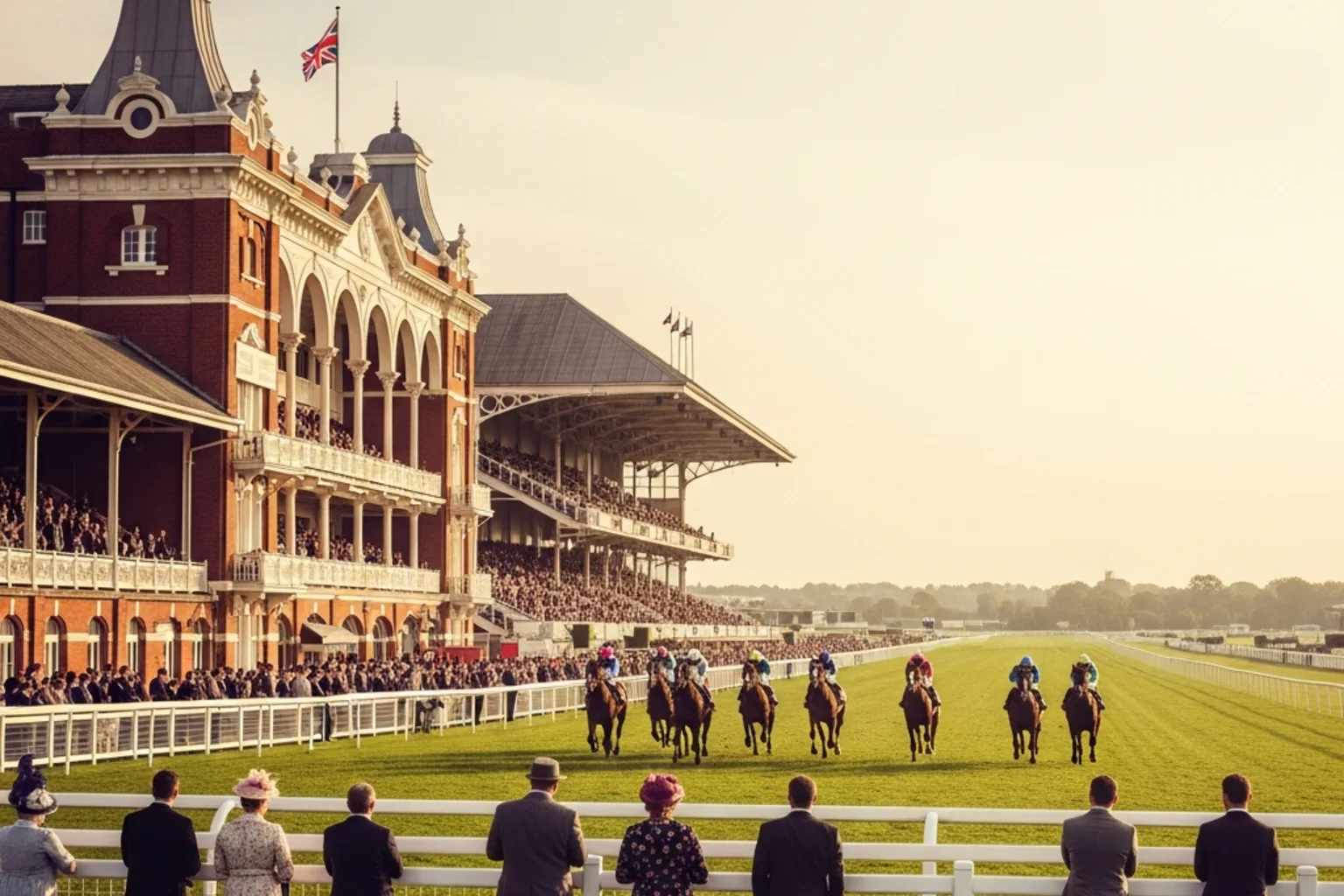
The Lincoln Handicap has opened Britain’s flat racing season for more than 170 years. That longevity makes it a rare institution—a race that has survived world wars, economic upheaval, the closure of its original venue, and fundamental changes to how horse racing is consumed and wagered upon. Understanding its history provides context for why the race matters and how its character has evolved.
Few races carry the weight of tradition that the Lincoln does. It predates the Derby at Epsom by several decades as a handicap event. It has attracted the attention of punters, bookmakers, and the press since Victorian Britain first became obsessed with racing. The race’s Spring Double combination with the Grand National, though diminished in modern betting culture, once dominated the headlines and aspirations of ordinary punters across the country.
This account traces the Lincoln from its inception at Lincoln Racecourse in 1853 through its move to Doncaster in 1965 and into the present day. Along the way, we’ll encounter record-breaking fields, legendary trainers, the only horses to win the race twice, and moments that shaped how British racing understood itself. A race shaped by time, preserved by tradition.
History isn’t merely nostalgia here. Patterns that emerged decades ago persist today. The race’s competitive nature, its appeal to improvers rather than established stars, its timing at the season’s vulnerable opening—these characteristics existed from the beginning and continue to define what it means to win the Lincoln Handicap.
1853: Birth of the Lincoln
The Lincoln Handicap was established in 1853 at Lincoln Racecourse, known locally as the Carholme. The course sat on open ground near the city of Lincoln, part of the flat Lincolnshire landscape that had supported horse racing for centuries. The inaugural running attracted a solid field, though nothing like the massive entries that would characterise the race’s peak years.
Handicap racing was then a relatively modern concept. The idea that horses of different abilities could compete competitively by carrying different weights appealed to both sporting ideals and gambling interests. Weaker horses given weight concessions might genuinely challenge their betters, creating uncertainty that fuelled betting turnover. The Lincoln embraced this philosophy from the start.
The race’s timing—early spring, typically late March—was deliberate. It would open the flat racing season, providing a focal point after the winter months when only jump racing occupied attention. This positioning gave the Lincoln an importance beyond its prize money. It became the signal that flat racing had returned, that summer sport was approaching, that a new campaign had begun.
In those early years, the Lincoln established its character. Large fields, competitive betting markets, surprise results. The race attracted horses targeting this specific event rather than using it as a stepping stone to bigger prizes. Trainers learned that specific preparation mattered—the horse needed to be race-fit in early spring while rivals might still be shaking off winter rust. These patterns would persist for over a century.
Lincoln Racecourse itself was a galloping track, flat and fast, suited to horses with stamina and tactical speed over the mile distance. The Carholme hosted the race through economic depressions, through the Edwardian era, through two world wars. The Lincoln Handicap became so associated with its venue that the race and the city shared an identity in racing’s imagination.
The Lincoln Era: 1853–1964
For 111 years, the Lincoln Handicap remained at its original home. Those decades encompassed fundamental changes in British society—the expansion of railways that allowed racegoers to travel from London, the rise of the popular press that covered racing for mass audiences, the development of the starting stalls that would eventually replace flag starts, the creation of camera technology that could judge finishes.
Throughout this period, the Lincoln maintained its essential character. It attracted large fields of competitive handicappers. It opened the flat season. It partnered with the Grand National in the Spring Double tradition that dominated betting columns and public imagination. The race’s prize money grew, though never to the levels of the Classics. Its importance derived from timing and tradition rather than pure financial reward.
The Victorian era established the Lincoln’s reputation. Newspapers devoted columns to the race, tipsters built followings on their Lincoln predictions, and bookmakers shaped their spring books around expected entries. The race became a cultural event as much as a sporting one—a marker in the calendar that signalled winter’s end and the return of summer pursuits.
The interwar years represented something of a golden age. Racing attendances boomed as working-class punters embraced the sport through off-course bookmakers. The Lincoln’s accessible format—a handicap where any horse might win—suited this democratic moment. The race attracted nationwide attention, its results reported alongside political news and cricket scores.
World War II interrupted but didn’t extinguish the Lincoln. Racing continued in modified form during the conflict, and the Lincoln returned to something approaching normality in peacetime. The post-war years saw the race attract its largest ever fields as entries swelled beyond what the course could comfortably handle.
By the early 1960s, however, Lincoln Racecourse faced existential challenges. The facilities had aged. Investment had lagged. Competing tracks with better infrastructure and more convenient locations threatened the course’s viability. The Lincoln Handicap remained prestigious, but its host venue was struggling to survive in a modernising industry. The race would need a new home to continue its story.
1948: The 58-Runner Record
The 1948 Lincoln Handicap remains unique in British flat racing history. Fifty-eight horses went to post—the largest field ever assembled for a flat race in the United Kingdom. The spectacle defied modern sensibilities about safety and manageable competition, but it reflected the post-war hunger for racing and the Lincoln’s particular appeal.
Managing 58 runners required logistical ingenuity. The starting apparatus stretched across an extraordinary width of course. Jockeys lined up in a mass that could barely be contained. The break, when it came, must have resembled cavalry charges more than controlled sport. Commissar won the race, emerging from chaos to claim a victory that statisticians still reference when discussing field sizes.
Why did the 1948 Lincoln attract such an enormous entry? Several factors converged. Pent-up demand from war years meant trainers had horses ready to run that might otherwise have been retired or culled. The prize money, though modest by today’s standards, represented significant return for yards still recovering from wartime austerity. And the Lincoln’s reputation as an “anyone can win” race encouraged optimistic entries from connections who might have faced longer odds elsewhere.
The race itself generated enormous public interest. Crowds packed Lincoln Racecourse to witness the spectacle, while millions followed through radio and newspapers. The scale of the event captured imaginations in ways that smaller fields never could. Commissar’s victory entered racing folklore, not merely for what the horse achieved but for the context in which he achieved it.
The 58-runner record stands unbroken because modern racing would never permit such fields. Safety regulations, insurance requirements, and simple practicality limit contemporary handicaps to around 30 runners at most. The 1948 Lincoln represents a different era’s tolerance for risk and spectacle—a reminder that horse racing has always balanced tradition against evolving standards.
That race also demonstrates the Lincoln’s magnetic pull on trainers and owners. No other flat race in British history has attracted comparable numbers. The combination of timing, competitive opportunity, and betting interest created conditions that made the Lincoln uniquely appealing. Some of that appeal persists today, even within more sensible field limits.
1965: The Move to Doncaster
Lincoln Racecourse closed permanently after the 1964 season. The course could no longer sustain itself economically, and no viable rescue emerged. The final meeting took place in September 1964, ending over a century of racing on the Carholme. The Lincoln Handicap needed a new home.
Doncaster was the logical choice. Town Moor offered a straight mile of comparable quality to Lincoln’s course. The track had excellent facilities, strong attendance, and a history of hosting major racing. Moving the Lincoln Handicap to Doncaster preserved the race’s essential nature while relocating to a venue capable of supporting it long-term.
The transition wasn’t merely geographic. Doncaster brought different draw characteristics, slightly different ground conditions, and a different relationship with the surrounding community. Punters who had learned Lincoln’s quirks needed to recalibrate. Trainers who had targeted the old track needed to understand the new one. The race retained its name and its timing but became, in some respects, a different event.
Critics initially questioned whether the relocated race could maintain its prestige. Would trainers still target it specifically? Would punters still regard it as the flat season’s proper opening? Would the Spring Double retain its romance when one leg was run at a different venue? These concerns proved largely unfounded. The Lincoln Handicap at Doncaster established its own tradition, building on the foundation laid at the Carholme while developing new characteristics suited to its host track.
The move to Doncaster also coincided with broader changes in British racing. Television coverage expanded. Off-course betting was legalised in 1961, transforming the industry’s economics. The Lincoln adapted to these changes, remaining relevant even as the sport around it evolved. The race’s survival through relocation demonstrated resilience that would characterise its subsequent decades.
Modern Era: 1965–Present
The Lincoln’s six decades at Doncaster have cemented its modern identity. The race continues to open the British flat season in late March or early April, though scheduling occasionally shifts around Easter dates. Its prize fund reached £150,000 in 2025, with the winner collecting over £77,000. That’s substantial for a handicap, though well below the purses for Group races and Classics.
Field sizes have settled into a sustainable range. Modern Lincolns typically attract 20-25 runners, still large by handicap standards but manageable for safety and competition. The race retains its reputation for unpredictability—favourites continue to disappoint, outsiders continue to prevail, and finding the winner requires genuine analysis rather than form-book shortcuts.
The modern Lincoln has produced memorable renewals. Close finishes, surprise connections, horses that launched successful campaigns from this first major prize. The race remains a target for trainers who understand its specific demands, particularly those with progressive handicappers suited to early-season conditions.
Television coverage has transformed how audiences experience the Lincoln. ITV Racing broadcasts the meeting to millions, and betting exchanges allow punters to trade positions in-play. The race reaches a wider audience than ever, even as the once-dominant Spring Double tradition has faded. Modern punters may not link Lincoln with Grand National the way their grandparents did, but they still regard the Lincoln as the flat season’s proper start.
The betting landscape surrounding the Lincoln has evolved dramatically. Online wagering has replaced high-street bookmakers for many punters. Ante-post markets open months in advance, with sophisticated odds comparison available instantly. Each-way terms have standardised at enhanced levels for big fields. These changes have altered how punters engage with the race but haven’t diminished its appeal.
Prize money growth reflects the race’s continuing importance. The £150,000 purse represents genuine investment in maintaining standards. Connections see the Lincoln as worthwhile not just for prestige but for material reward. That combination of tradition and financial substance ensures the race attracts competitive fields year after year.
Repeat Winners: Ob and Babur
In over 170 years of competition, only two horses have won the Lincoln Handicap twice: Ob in 1906-07 and Babur in 1957-58. That statistic speaks to the race’s competitive nature and the handicapper’s efficiency. Winning once is difficult; winning again with the inevitable weight penalty is almost impossible.
Ob’s back-to-back victories came in the Edwardian era, when the handicap system was less refined and perhaps less ruthless in adjusting marks. A horse that won the Lincoln might face an eight or ten-pound rise, substantial but not always insurmountable for a genuine improver. Ob was good enough to overcome that burden, prevailing in consecutive runnings against fields that knew what they faced.
Babur’s double came fifty years later, in the post-war period when the race attracted enormous fields and intense betting interest. His 1957 and 1958 victories demonstrated that class could overcome the handicapper’s adjustments—but even class has limits. No horse since has managed to repeat Babur’s achievement, despite the obvious temptation for connections to try.
Why haven’t more horses won twice? The handicap system has become increasingly sophisticated. A Lincoln winner faces an immediate rating rise that makes repeating prohibitively difficult. Trainers often move winners to different targets rather than attempting the impossible—a horse good enough to win the Lincoln off a low mark might be good enough to compete in better company off a higher one.
The absence of repeat winners since 1958 underlines what any Lincoln student knows: this is a race for horses on the way up, not for established performers looking to add to their records. Ob and Babur remain anomalies, their achievements unrepeated for nearly seven decades and counting.
Legendary Trainers Through History
Certain trainers have demonstrated particular affinity for the Lincoln Handicap. William Haggas holds the modern record with five victories: High Low in 1992, Very Wise in 2007, Penitent in 2010, Addeybb in 2018, and Godwinson in 2025. That span of 33 years shows sustained understanding of what the race demands.
Haggas’s approach combines preparation with patience. His winners have typically come into the Lincoln race-fit but not over-raced, their winter campaigns designed to secure manageable handicap marks rather than to accumulate wins. The trainer clearly sees the Lincoln as a specific target worthy of specific preparation, not merely another race on the calendar.
Historical records from the Carholme era are less precise, but certain trainers dominated periods of the race’s long history. The early 20th century saw some yards produce multiple winners, though none matched the consistency Haggas has shown in the modern era. The race has always rewarded trainers who understood its peculiarities rather than those who simply sent good horses.
What distinguishes successful Lincoln trainers? First, they target the race deliberately rather than using it as a convenient early-season outing. Second, they prepare horses to peak on the day—ready to run a sharp mile in late March when many rivals are still coming to fitness. Third, they choose appropriate types: progressive handicappers rather than exposed performers, horses whose ratings might underestimate their true ability.
Studying which trainers enter horses for the Lincoln, and which have historical success, provides analytical edge. A trainer with multiple Lincoln victories understands the race. A trainer entering for the first time may have a good horse but lacks the institutional knowledge that comes from experience. The trainer factor doesn’t override form analysis, but it deserves consideration in any shortlist.
The Spring Double Connection
For generations, the Spring Double—combining the Lincoln Handicap with the Grand National—represented the pinnacle of betting ambition for ordinary punters. The two races fell in close proximity on the calendar, both attracted massive fields, both offered long-priced winners who could transform modest stakes into life-changing returns.
The Spring Double’s appeal was partly mathematical. Multiplying two unpredictable outcomes created extraordinary potential payoffs. A 20/1 Lincoln winner combined with a 25/1 Grand National winner produced odds of over 500/1 on a 25p double. For working-class punters who could only afford small stakes, the Spring Double offered dreams that no single bet could match.
The tradition reached its height in the mid-20th century. Newspapers devoted special coverage to Spring Double prospects, analysing which horses might feature in both races’ betting. Factory floors and pub corners buzzed with discussion of dual selections. The Spring Double became a social phenomenon, a shared lottery that millions participated in each spring.
Only one jockey has ever landed both legs of the Spring Double in the same year. Dave Dick achieved this unique feat in 1956, riding victories in both the Lincoln and the Grand National within weeks of each other. The accomplishment remains unrepeated, a testament to how difficult winning either race is, let alone both.
Modern betting culture has diminished the Spring Double’s prominence. Accumulator and enhanced-odds promotions offer similar multiplied returns across any combination of events. The specific romance of Lincoln plus National has faded, replaced by generic excitement about big-race weekends. Older punters remember when the Spring Double dominated sports pages; younger ones may not recognise the term.
Yet the underlying concept retains validity. The Lincoln and Grand National remain large-field events where outsiders frequently prevail. Combining them in a double still makes mathematical sense for punters comfortable with high-variance, high-reward betting. The tradition has weakened but hasn’t died entirely. Each spring, some punters still assemble their Spring Double slips, connecting with a betting tradition that predates their grandparents.
Key Takeaways
The Lincoln Handicap has opened Britain’s flat season since 1853, surviving the closure of its original venue and adapting to fundamental changes in racing’s structure and economics. The race moved from Lincoln to Doncaster in 1965 but maintained its essential character: large competitive fields, unpredictable results, and a timing that marks the beginning of summer sport.
Historical records include the 58-runner field of 1948—the largest in British flat racing history—and the unique achievements of Ob and Babur, the only horses to win the Lincoln twice. William Haggas holds the modern training record with five victories spanning 33 years, demonstrating that sustained understanding of the race’s demands produces consistent results.
The Spring Double tradition linking Lincoln with the Grand National has faded but not vanished entirely. Dave Dick’s 1956 accomplishment of winning both races remains unique, a reminder of how difficult success in either event is. The tradition connected generations of ordinary punters to horse racing through the mathematical appeal of combining two unpredictable outcomes.
Understanding the Lincoln’s history provides context for contemporary analysis. The race has always favoured progressive handicappers over exposed performers, has always rewarded trainers who target it specifically, and has always offered value to punters willing to oppose obvious choices. These patterns, established at the Carholme over 170 years ago, persist at Doncaster today.
